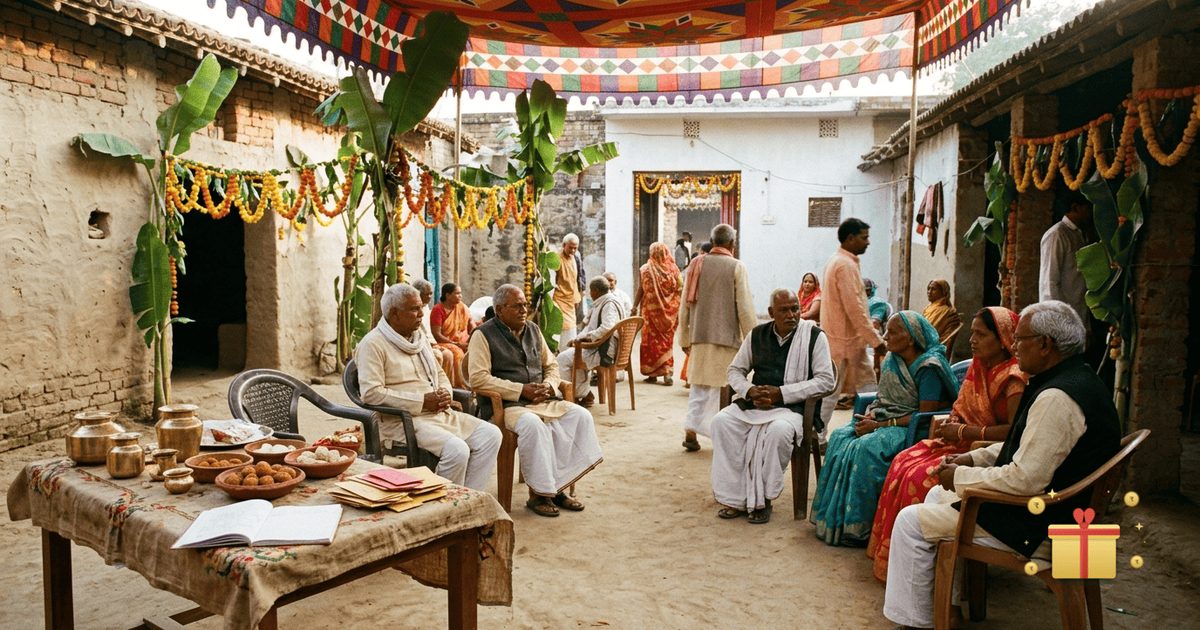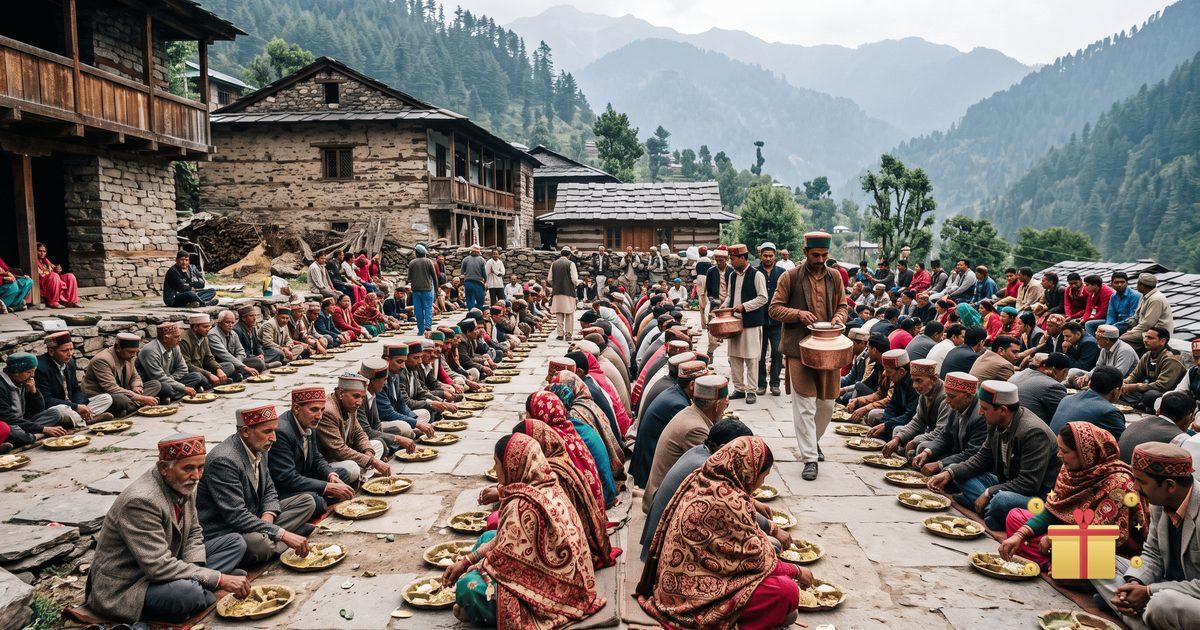
Gujarati wedding shagun starts long before anyone reaches the mandap. It begins on the day two families sit together and agree the match, and it carries on through envelopes, trays of clothes, bangles and sweets, right up to the visits that follow the wedding. The word covers all of it, because in a Gujarati household shagun is not really a present. It is a blessing that happens to be given in a form you can hold.
If you are attending one of these weddings, the practical questions are simple enough: what is expected of you, and when. If you are hosting one, you have the harder job, because several hundred people will hand you envelopes over a few hours and someone has to write every one of them down. This guide covers both.
What shagun means in a Gujarati family
Two ideas run through all of it. The first is shubh aarambh, an auspicious beginning. The amount inside the envelope is meant to be an opening rather than a settled sum, which is why it almost always ends in one: ₹101, ₹501, ₹1,100, ₹2,100, ₹5,100, ₹11,000. Families keep ₹1 coins on hand for exactly this.
The second is vyavhar — the long, patient back-and-forth between two families. What you give at someone's wedding is very likely to shape what arrives at your own daughter's or your son's. Older relatives remember these things for decades, and they are rarely wrong.
Practice varies a great deal across Gujarat. Kutchi, Kathiawadi, Surti, Patidar, Jain and Vaishnav families all do this slightly differently, and so does the family next door. Treat anything written here as the general shape, not the rule.
Chandlo vidhi: where the gifting begins
Chandlo and the matli
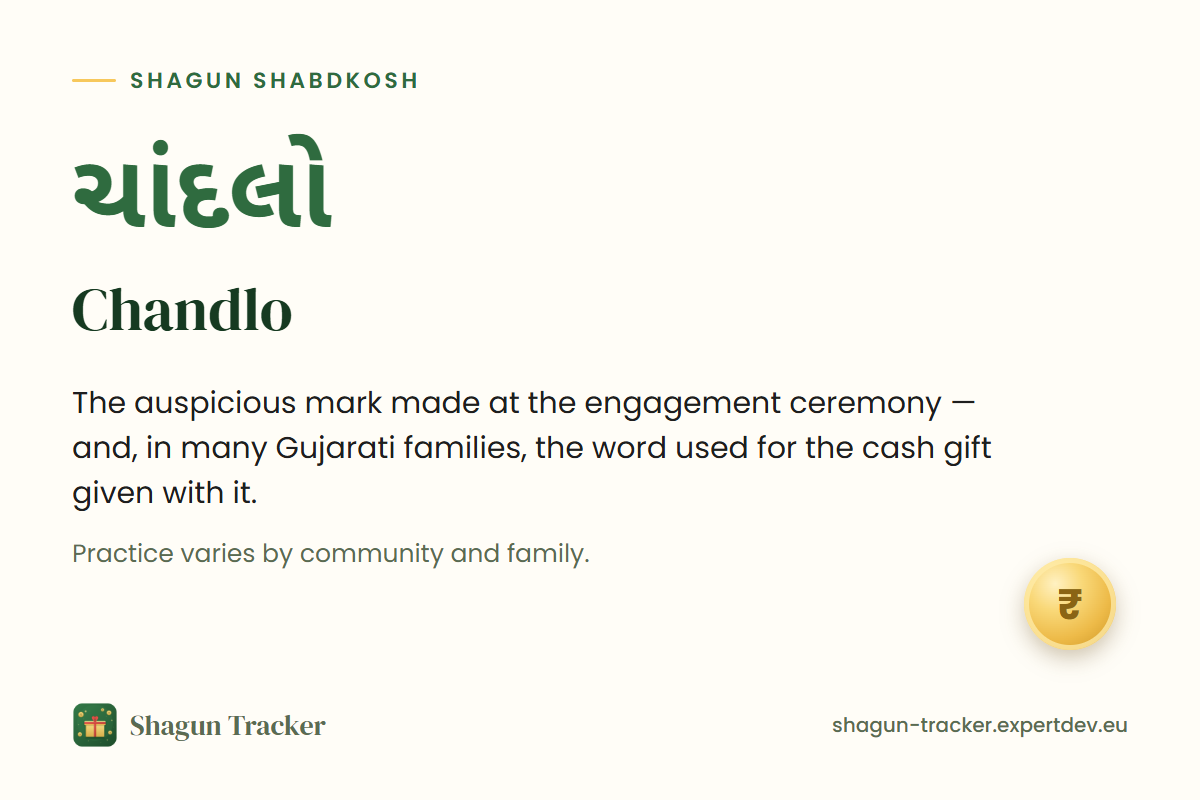
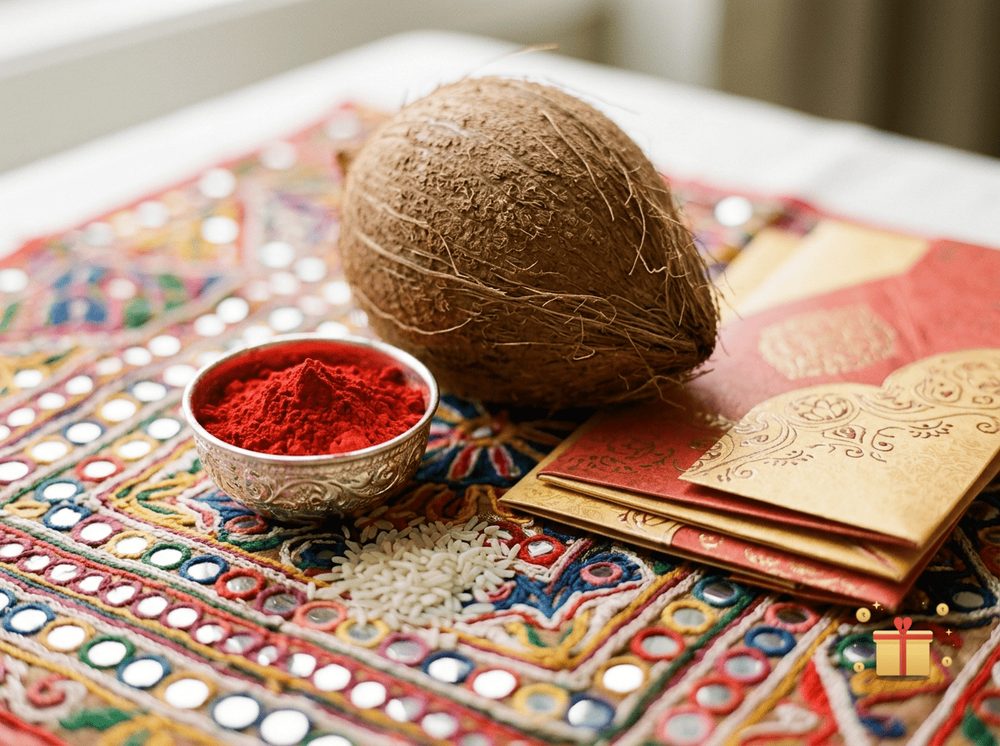
Chandlo is the red mark applied to the forehead. In the chandlo vidhi, the bride's father, usually with a few male relatives, visits the groom's home, applies the chandlo and gives shagun. The gifts are commonly carried in a decorated pot, the matli, filled with sweets and dry fruit. This is the moment the alliance is treated as fixed, and in many families it is talked about afterwards as the day the wedding actually began.
Gol dhana
Gol dhana literally means jaggery and coriander seeds, both of which are distributed to the gathering. Many families hold it on the same day as the chandlo, others keep it separate and run it closer to a full engagement with a larger guest list. Once outside guests are invited, envelopes start arriving in numbers, and this is usually the first function where someone genuinely needs to be keeping a list.
Where gifts change hands during the wedding
Mameru or mosalu
Shortly before the wedding, the bride's maternal uncle and his family arrive with gifts for her — clothing, bangles, jewellery — and usually something for her parents and siblings too. This is one of the largest single gifting moments in a Gujarati wedding and one of the most closely watched. What is brought differs widely by community, so it is not a checklist anyone should be handed; it is a relationship being expressed.
The small ceremonies at home
In the days before the wedding there is a run of home-based functions: the mandap being raised, the haldi, the garba and sangeet evenings. Envelopes and clothes move at all of them, often informally, often handed to an aunt rather than to any table. These are the gifts most likely to be forgotten by the next morning.
The wedding day and reception
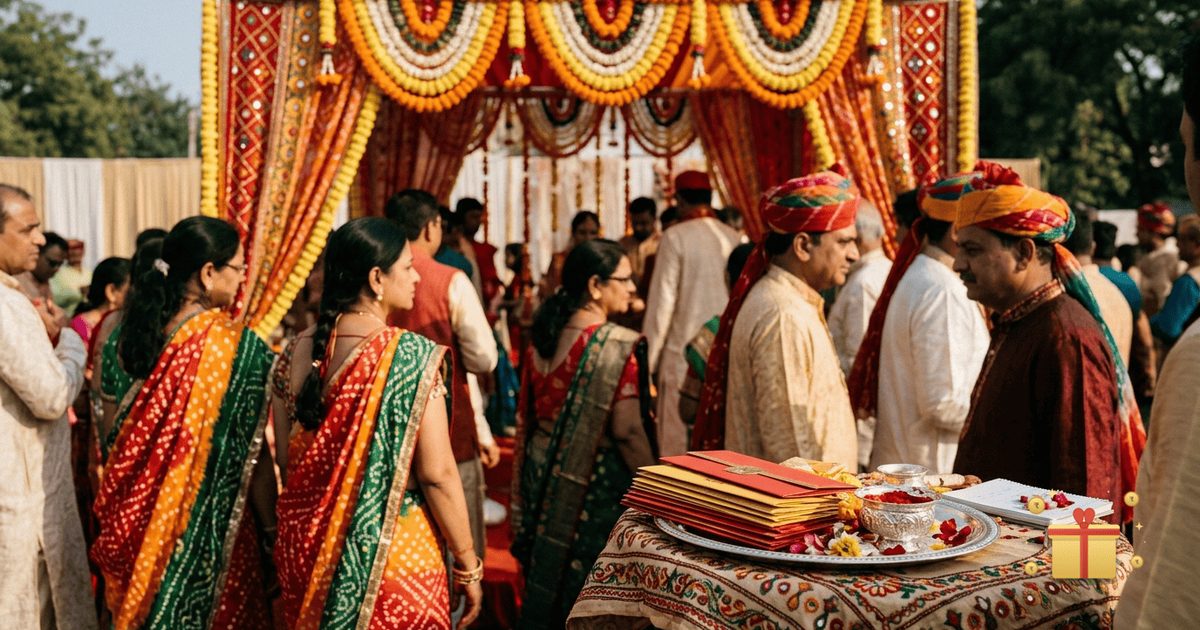
This is the volume event. Guests arrive in waves, envelopes come to the gift table, to a cousin on the way in, or straight to the couple on the stage. Cash, clothes, silver and gold all arrive in the same hour, and the same guest may give more than one kind of gift — an envelope for the couple and a saree for the bride's mother, say.
After the wedding
Gifting continues through the first visits back and forth between the two homes, and through the first festival the couple spends together. None of it is separate from what came before; it is the same running account of goodwill between two families.
How much do people usually give?
Nobody can give you a correct figure, and anyone who does has only seen one part of Gujarat. What holds broadly:
- Colleagues and acquaintances give a modest amount that acknowledges the invitation and the meal.
- Friends usually give more, and often settle on a common figure among themselves so nobody feels out of step.
- Relatives give according to closeness, and frequently in line with what that family gave at their own function.
- The maternal side traditionally gives generously, and in many families this is a matter of real pride.
Two things matter more than the number. The amount should end in one, and the envelope should have your name on it. An unnamed envelope is a problem the hosts inherit: they cannot thank you properly, and when your family's turn comes they have nothing to go on. If you are still unsure what to put in, our guide on how much shagun to give at an Indian wedding works through it in more detail.
How families keep the record
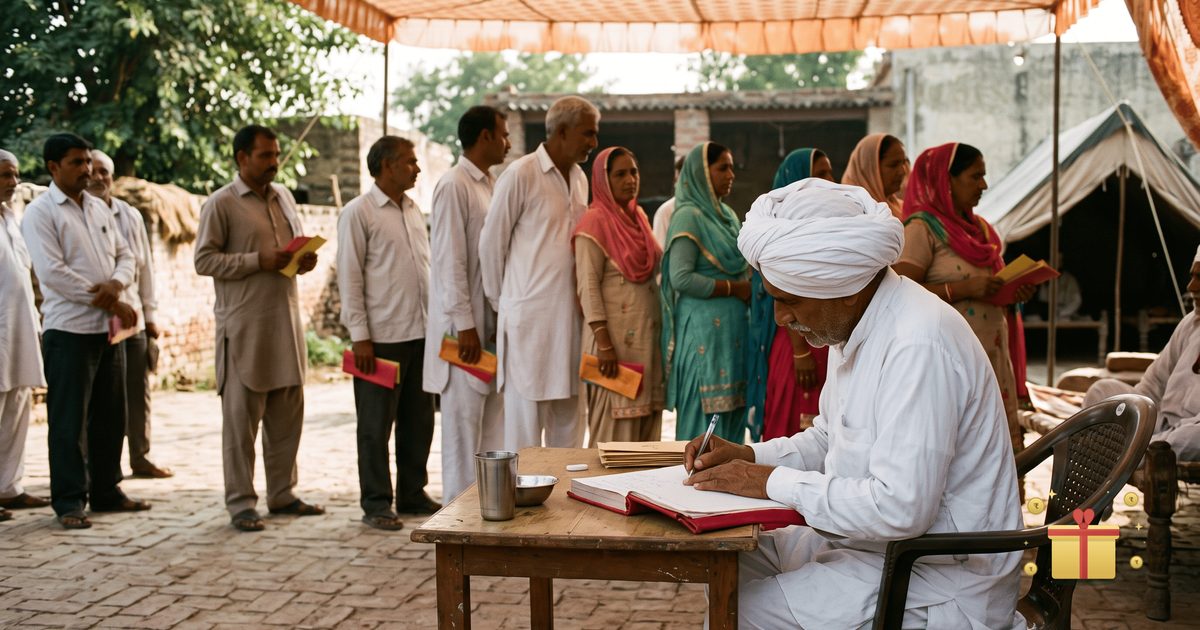
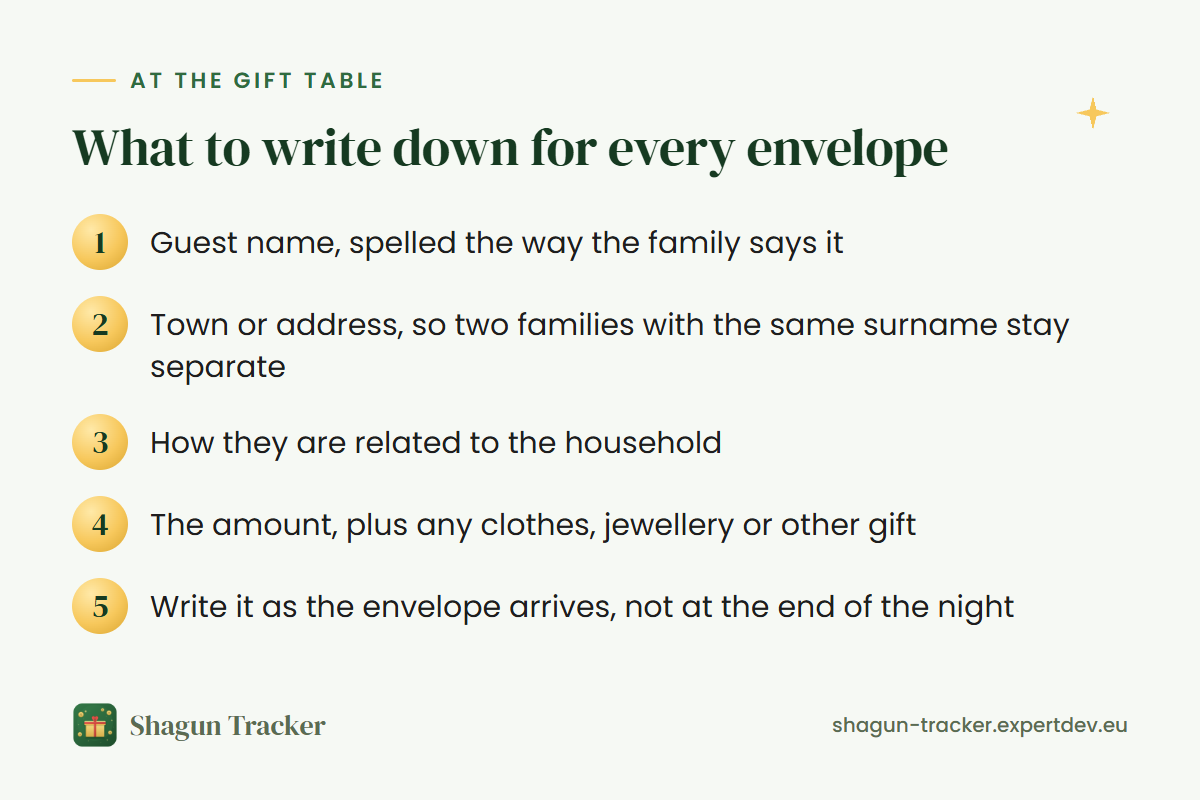
The traditional method is a register — many Gujarati families still call it the chopdo — kept open at the gift table, with a column for the name, the town or society, and the amount. It works well right up until it doesn't.
- Unnamed envelopes. Every wedding produces a handful, and by the end of the night nobody can place them.
- Two people writing in one book. When the queue builds up, entries get duplicated or skipped entirely.
- Non-cash gifts go unwritten. A silk saree or a silver dish is harder to note quickly, so it often isn't noted at all.
- The book itself. Fifteen years on, the ink has faded or the register was lost in a house move, right when the next function makes it relevant.
- Gifts received away from the table. The envelope handed to a cousin during the garba never reaches the register.
Habits that actually help
- One person, one list. Decide in advance who is recording, and route every envelope to them.
- Record as it arrives. Not at 1am, when nobody remembers whether the ₹2,100 came from the neighbours or the office.
- Note the relation and the town, not only the name. "Shah saheb" means nothing in six years. "Shah saheb, father's colleague, Rajkot" does.
- Write down clothes, gold and silver too, in plain words: a Patola saree, a gold chain, a silver thali.
- Copy it the same week. Photograph the pages, or export a file and send it to two relatives so it exists in more than one place.
If you are the one running the table on the day, the shagun counter checklist for hosts is worth reading before the function rather than during it.
Doing it on a phone instead
Plenty of families have moved the chopdo onto a phone, not for novelty but because the phone is already in your hand at the table, it adds up as you go, and the list can be searched afterwards in seconds instead of read page by page.
Shagun Tracker is built for this. You create an event for the function, add each guest with a name, address and relation, and record what they gave — money, clothes, gold or something else — with the total updating as you go. Afterwards you can search any name in Hindi or English and export the whole list as a PDF or spreadsheet for the family. It works offline, which matters in a banquet hall with no signal.
Why the record is worth keeping
None of this turns a wedding into an account book. It does the opposite. Written down properly, the record is what lets you return the gesture at the right time and in the right measure — when their daughter marries, when there is a new house, when the next generation's turn comes. That is what vyavhar means in practice, and it only survives if somebody wrote it down. If you want to see how the same idea plays out elsewhere in the country, the guides to shagun in a Punjabi wedding and aher in a Maharashtrian wedding cover much the same ground with different names.