In much of Haryana, the money given at a wedding is not simply handed over and forgotten. It is called neota — also said as nyota or nyauta, depending on the village — and it comes with a condition that most gifting customs do not insist on: it gets written down. The neota register kept at the wedding house records who gave, how much, and from which household, because when that household holds its own function, the giving is expected to travel back the other way.
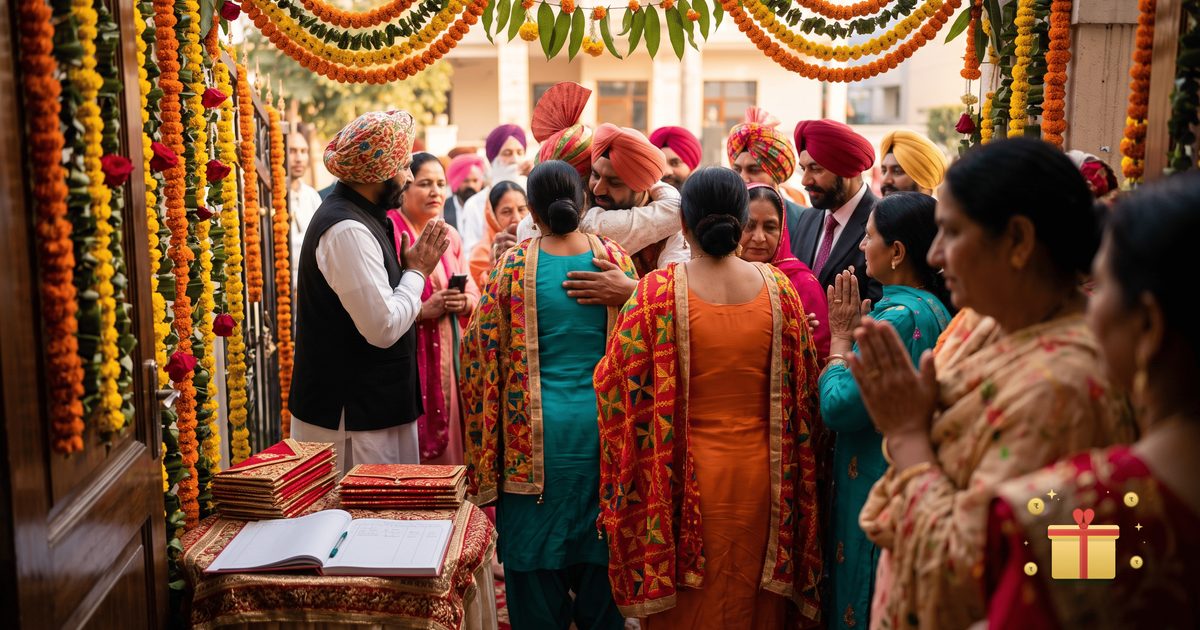
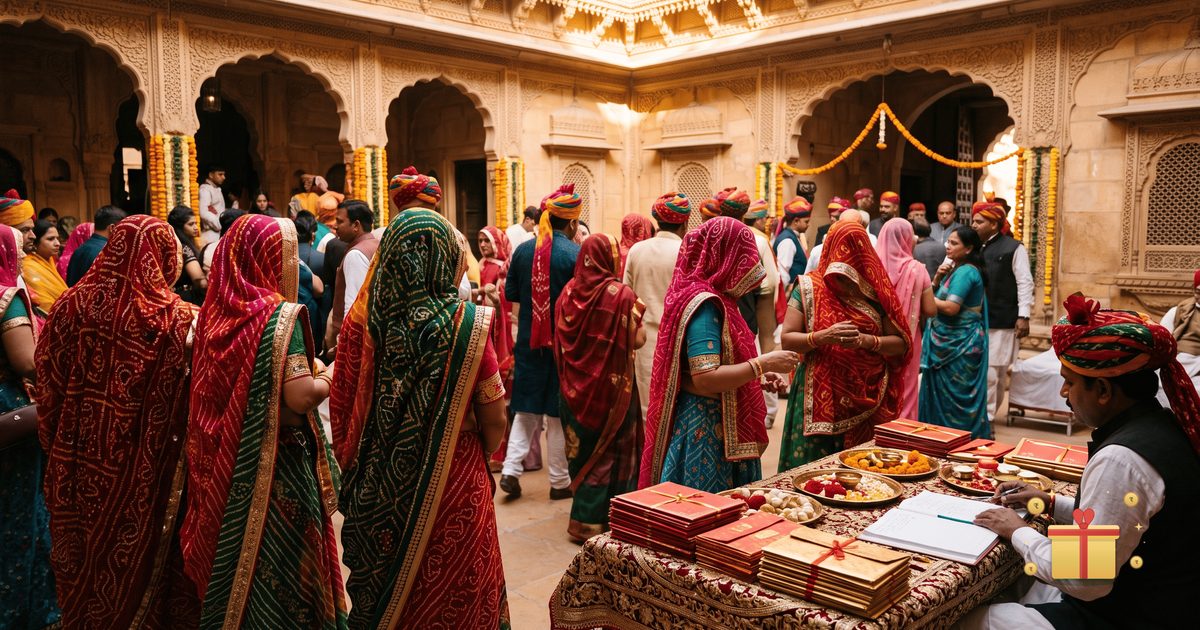
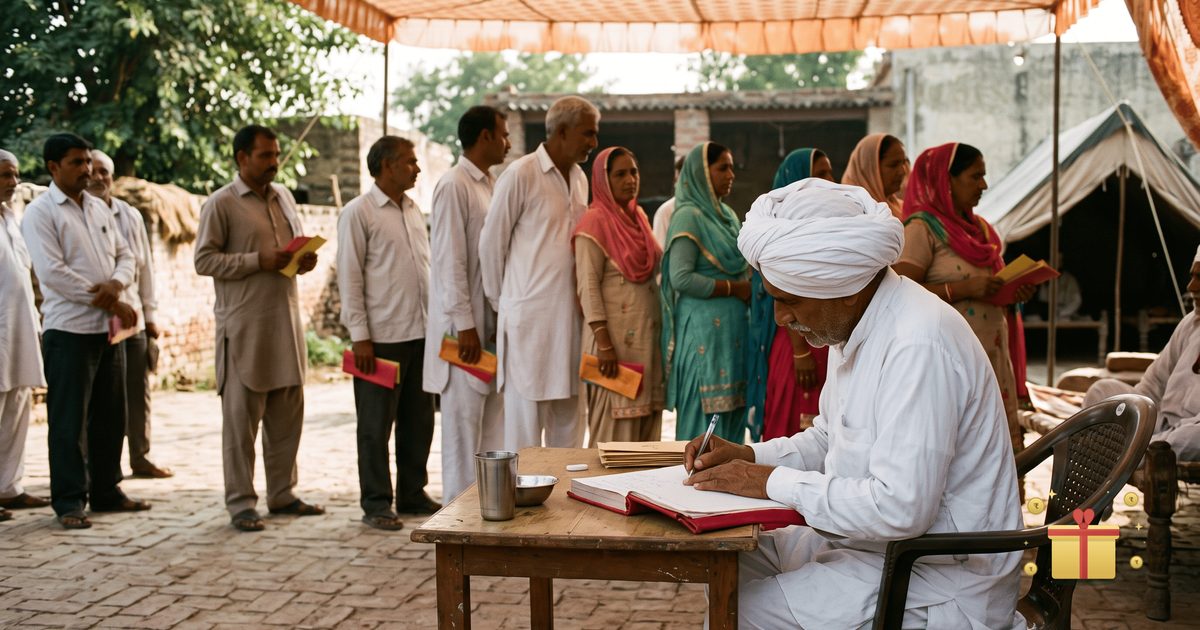
If you have been to a village wedding in Rohtak, Hisar, Jind or Bhiwani, you have seen it: a table near the entrance, a thick notebook, and one relative with a pen who does not leave that chair for three hours. This guide is about that notebook — what the custom means and how families keep the record straight.
What neota means in a Haryana wedding
Neota is a cash gift given to the host family at a wedding or another large function, recorded by name, and understood as one move in a long exchange between two households rather than a present from one person to another. Related practices exist across north India under different names: Rajasthani families call something very similar neonda, and many households simply call the whole system vyavhar — dealings, the running account of who has stood by whom.
Two things set neota apart from an envelope quietly slipped across at a city reception. The first is that it is usually open rather than discreet: in many families the giver's name and the amount are said aloud as they are entered in the book. The second is that reciprocity is built into the idea from the start. Nobody sends a reminder and nothing is enforced, but it is remembered — and the register is how it is remembered.
The neota book is not an account of money. It is an account of who came, from which house, and how far they were willing to go for you. The amounts are just the handwriting it happens to be written in.
The register is part of the custom, not an afterthought
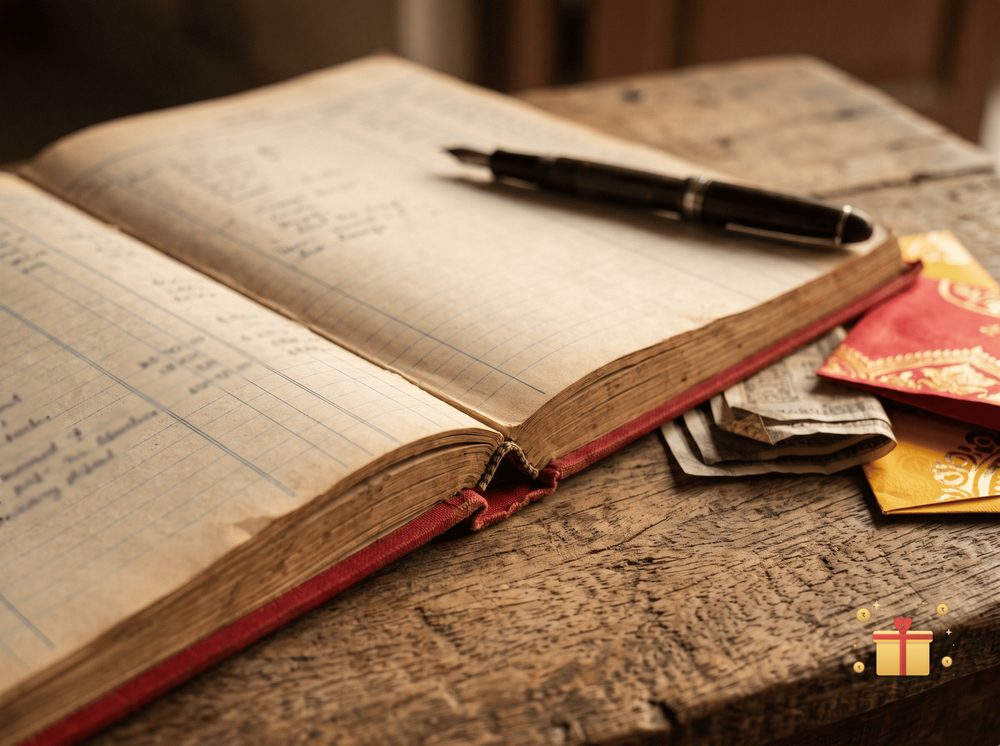
In most gifting traditions, writing the gift down is housekeeping — useful, but separate from the ritual. In neota, the writing is closer to being the ritual. The book is opened deliberately, someone is appointed to keep it, and entries are made in front of the giver so both sides agree on what was recorded. Old registers are kept for decades and consulted before the next wedding, sometimes by a generation that never met the people on the page.
How strictly any of this is followed varies enormously. Some families still run the full open, announced system; others have quietly moved to envelopes and a list, especially in cities. Neither is more correct, and no two villages in Haryana do it identically.
When neota and gifts change hands
At the wedding house
Most neota arrives on the main days, as households come to the wedding house. The giver is often from the same village or a family connected over generations, and they come specifically to give. Guests from further away, and friends and colleagues of the younger generation, tend to give the way they would at any north Indian wedding, in an envelope at the gift table.
Bhaat and the maternal side
The mother's family holds a distinct place in Haryanvi weddings. In the bhaat ceremony — known as mayra in some communities and in neighbouring Rajasthan — the mother's brothers and her wider family arrive with gifts for their sister and her children before the wedding. This is ceremonial and public, with the arriving party welcomed formally, and it has historically been one of the most significant forms of support the maternal side gives.
Whatever comes with the bhaat party is traditionally recorded as carefully as anything else, often in its own section of the book. Who leads it, what is brought and when it happens differ by community and family; in some households the formal invitation to the maternal family is itself a small ceremony held weeks earlier.
Neg at the smaller moments
Alongside neota sits neg: the small customary gifts attached to particular ritual moments rather than to the household exchange — the bride's sisters hiding the groom's shoes being the best-known. Neg is light-hearted, modest, and not normally entered in the register.
How much people give
There is no standard figure, and anyone who quotes one has seen a single corner of the state. What holds generally:
- Households with a long exchange usually look at their own register first, see what that family gave at an earlier function, and start from there.
- The maternal side is traditionally expected to give generously, and in many families this is a matter of real pride.
- Friends and colleagues give what is normal in their circle, often agreeing an amount among themselves so nobody is out of step.
- The figure ends in one. ₹101, ₹501, ₹1,100, ₹2,100, ₹5,100 and ₹11,000 are all ordinary; a round, closed number is avoided because the relationship is meant to continue.
If you are genuinely unsure where to land, our guide on how much shagun to give at an Indian wedding works through the same question for guests who do not have a family register to consult.
Returning neota at your own function
The return is the whole point of the record. When the giving household later holds a wedding, a mundan or another function, the family that received earlier goes back to the book and gives in turn. In most families the return is at least what was received; how much beyond that is entirely that household's own decision, shaped by how the relationship stands and what they can comfortably do.
This is why nobody should treat a neota register as a bill. It is a memory aid for a relationship — families who read it that way keep it for generations.
How families keep the record
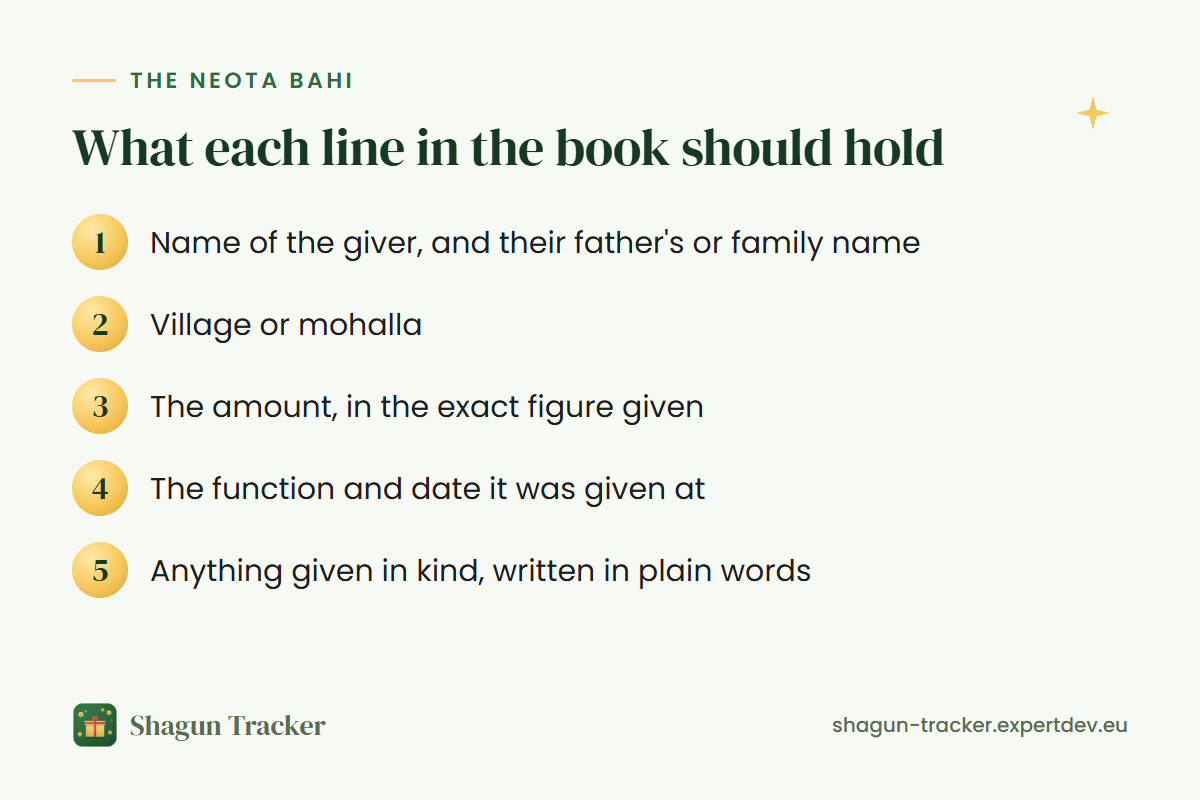
A good neota book is not just a column of numbers. The columns that matter are the ones that still make sense to somebody reading the page fifteen years later:
| Column | Why it earns its place |
|---|---|
| Name | The household name as everyone actually says it, not a formal version nobody will recognise later. |
| Village or address | Three families in the same biradari share a name. The village is what tells them apart. |
| Relation or side | Maternal, paternal, friend, neighbour, colleague — the one detail memory loses fastest. |
| Amount | Written as given, in figures, at the moment it is handed over. |
| Gifts in kind | Clothes, gold, a household item. Often skipped in the rush, and often the thing most worth remembering. |
| A line of context | What they gave last time, or which function this is returning. Two words now saves an argument later. |
What usually goes wrong
- Two people writing in the same book when the queue builds up, which produces duplicates and gaps in equal measure.
- Unnamed envelopes from guests who did not go to the neota table, which nobody can identify by the end of the night.
- Gifts in kind left out because a saree or a chain is harder to write quickly than a number.
- The book itself — faded, water-damaged or lost in a house move, discovered exactly when the next function makes it relevant.
Habits that help
- One person, one book, one seat. Decide in advance who is recording, and send everything through them.
- Record at the moment of receiving, never later that night from memory.
- Write the village or the mohalla next to every name, without exception.
- Note gifts in kind in plain words — a suit length, a gold chain, a dinner set.
- Copy it the same week. Photograph the pages or export a file, and give it to two other people in the family.
Keeping the neota bahi on a phone
Plenty of families have moved the book to a phone, and the reason is practical rather than fashionable: the phone is already in your hand at the table, it adds up as you go, and a name can be found in seconds instead of by turning pages.
Shagun Tracker was built around this habit. You make an event for the function, add each guest with a name, address and relation, and record what they gave — cash, clothes, gold or something else — with a notes line for context like what that household gave last time. Totals update as entries go in, names can be searched in Hindi or English afterwards, and the list exports as a PDF, CSV or backup file to share with relatives. It works offline, which matters in a village courtyard or a banquet hall basement; the optional register-scanning feature is the one part that needs internet, and it uses your own free Google Gemini API key added in settings.
If you still have an old paper register, that scan feature is worth trying on a page or two: you photograph the page, review and correct what was read, and only then save it. It handles neat Hindi and English handwriting best. Hosts planning the table itself may also want our shagun counter checklist for hosts.
Why the book is worth keeping
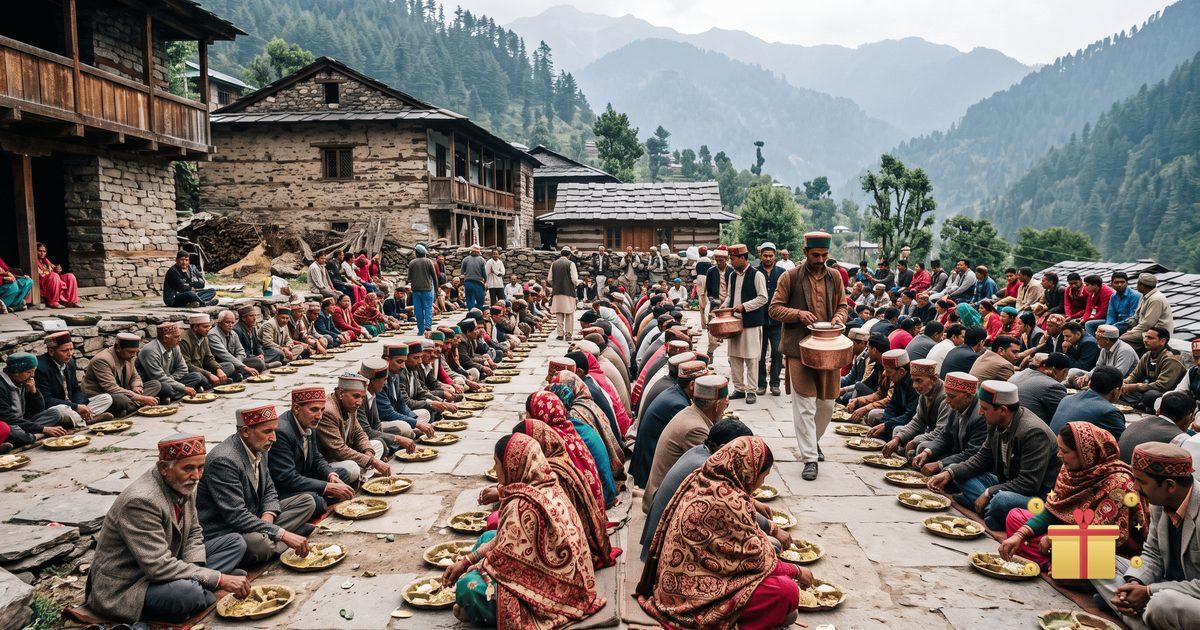
None of this makes a wedding into a transaction. It is the opposite. Neota exists because a large wedding was never something one household could carry alone, and the register is the proof that it did not have to. Read alongside shagun customs in Punjabi weddings or the Pahari gifting traditions of Himachal Pradesh, the same instinct shows up in different clothes across the north: give when you can, remember who gave, and return it properly when their turn comes. In Haryana, somebody simply had the sense to write it down.