A Himachali wedding runs on a different rhythm from one on the plains, and shagun does too. Guests travel from villages a valley away and stay two or three days. A good share of the giving arrives before the wedding as things rather than money — grain, ghee, milk, firewood, a day of somebody's labour. And the household hosting it is rarely hosting alone, because in the hills a wedding has traditionally been carried by the village as much as by one family. All of it still has to be remembered, which is where the register comes in.
Himachal is also not one tradition. Kangra, Mandi, Kullu, Shimla, Sirmaur, Chamba and the high districts of Kinnaur and Lahaul-Spiti each do things their own way, and communities within a single valley differ. What follows is how things are generally done, offered as orientation rather than a rulebook.
What shagun means in a Himachali wedding
Shagun is the auspicious gift: cash in an envelope, often with clothes, a shawl or a piece of jewellery. The amount ends in one — ₹101 or ₹501 as a token, ₹1,100, ₹2,100 or ₹5,100 at a wedding — because the figure is meant to read as a beginning rather than a closed sum. Himachali weddings are frequently more modest than urban ones, and nobody should read a smaller figure as a smaller sentiment.
What distinguishes the hills is how much of the giving is not cash at all. A neighbouring household sending milk for three days, an uncle who brings a sack of rice, cousins who arrive early to cook, carry and set up — these have always been the real substance of the exchange, and in many villages they still are. They are also the hardest part to record, which is exactly why they should be.
In a hill village, the question at a wedding was rarely how much someone gave. It was whether they came, how far they walked, and what they carried up with them.
Where gifts change hands
Fixing the match
When a match is settled, the two families visit each other with sweets, dry fruit, clothes and shagun. In much of Himachal the engagement stage is called thaka or sagai depending on the family, and it is often accompanied by a tilak. The gifting here is between households rather than from individual guests, and it usually produces the largest single entries of the whole wedding.
The baraat and the milni
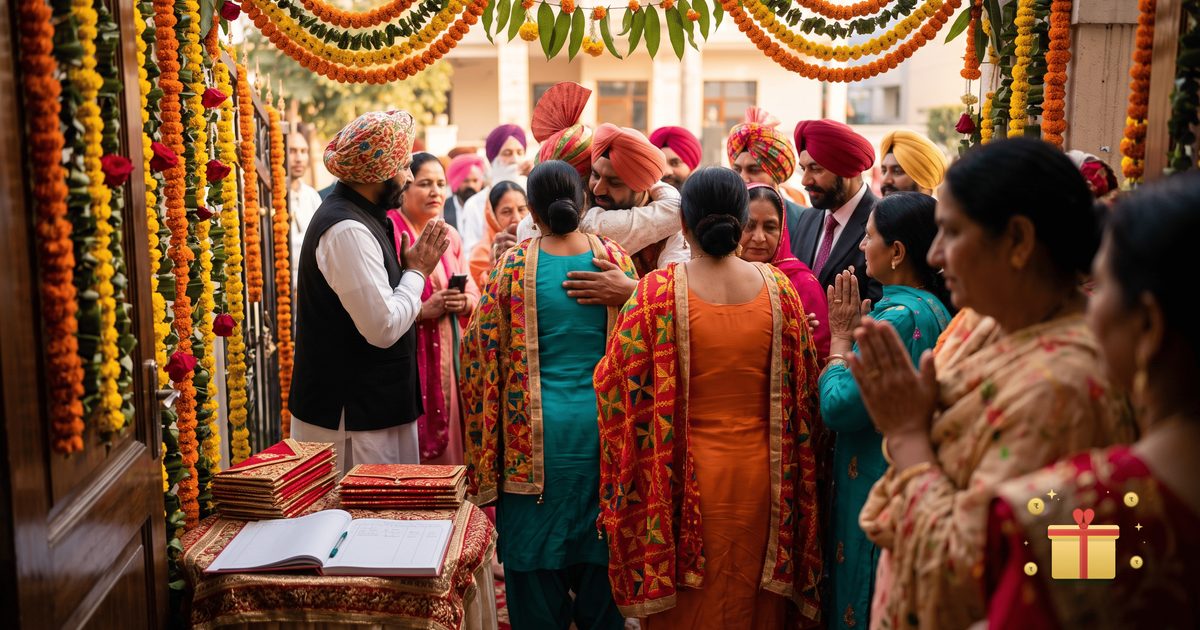
When the groom's party arrives, the two families meet and greet each other formally. Envelopes and gifts frequently change hands at that point, and older relatives on both sides may be honoured with a shawl or a cap as part of the welcome. The whole thing happens in a crowd, at the door, in ten minutes — which is why it is one of the easiest moments for a gift to go unrecorded.
The dham
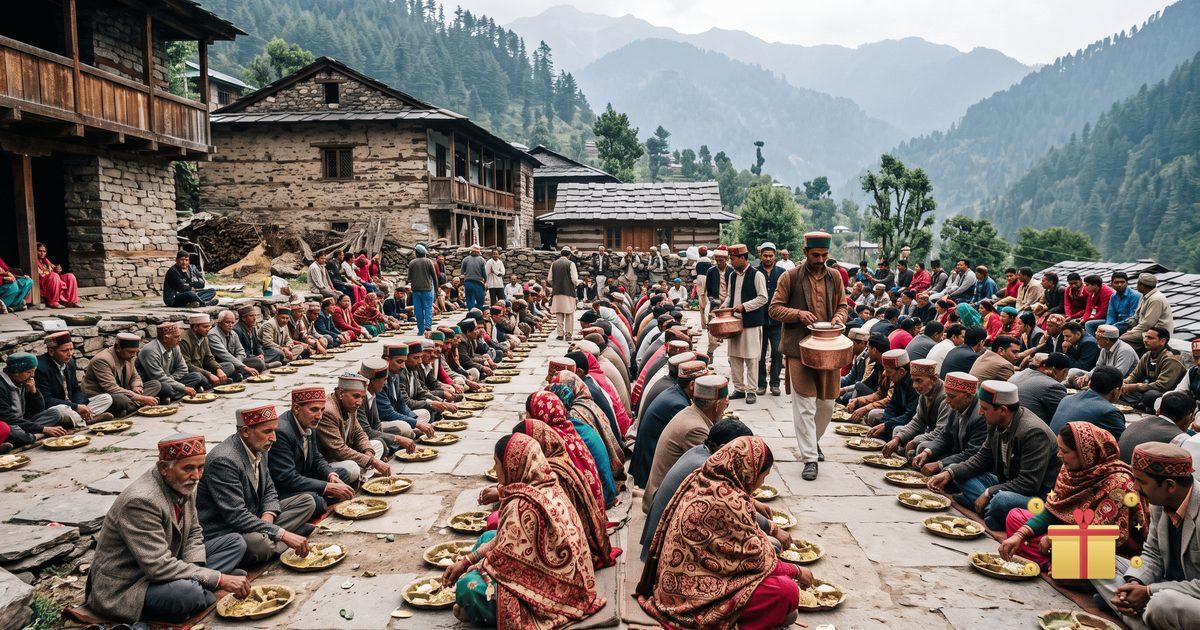
The feast is the dham: guests seated in long rows, served from large vessels by traditional cooks, typically eating off leaf plates. Kangra's dham is the best known, but the practice runs well beyond it and the dishes vary from valley to valley. It is unhurried, it is where most of the guest list passes through, and it is why the gift table usually sits close to it. In many families a dham is also held at the groom's home after the bride arrives.
Shawls, caps and cloth
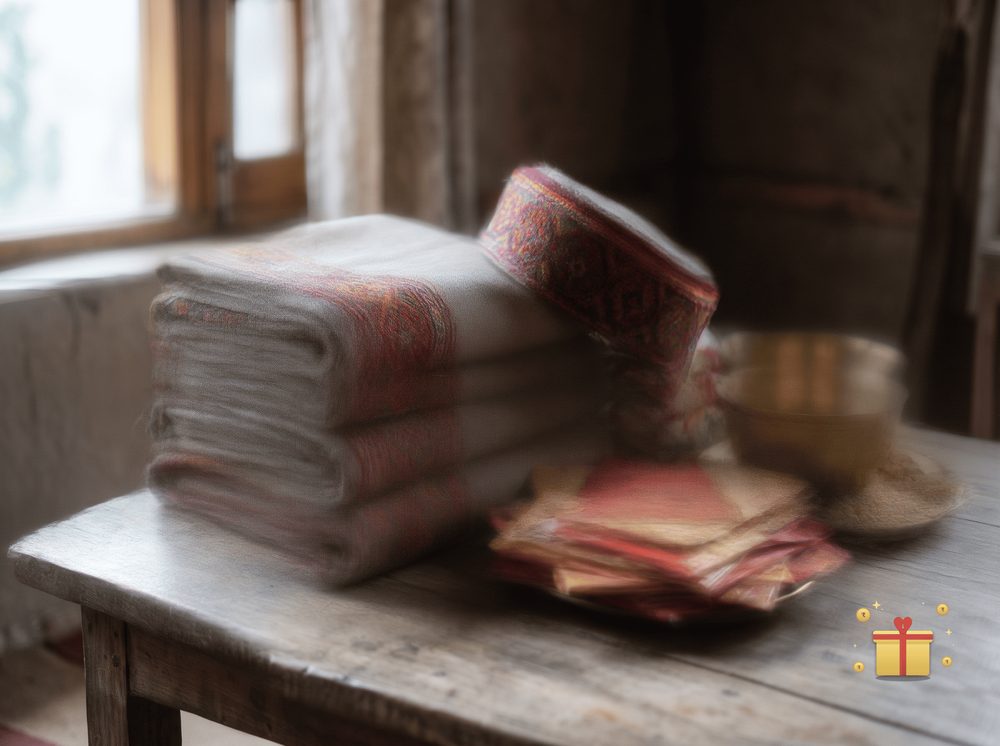
A good deal of Himachali gifting is in cloth rather than cash. The Kullu shawl and the Himachali cap are the classic honour gifts, given to elders, to visiting relatives and to the people being formally welcomed by each side, and woollens generally are a normal wedding gift in a state where they are used all year. These rarely make it into the register as written entries, though they are often the gifts people actually remember.
Small customary gifts
As on the plains, particular moments carry their own small tokens: the women who sing and dance at the door, the bride's sisters and cousins who hide the groom's shoes and negotiate their return, the relatives who lead a step of the ceremony. Amounts are modest and the mood is playful. Anyone travelling with the groom's party should keep a few ₹101 and ₹501 notes in an inner pocket.
How practice differs across the state
It is worth saying plainly that a wedding in Kangra and a wedding in Kinnaur are not variations on one script. As a rough orientation only:
- Kangra and Hamirpur are strongly associated with the dham and with large guest lists drawn from across the surrounding villages.
- Mandi and Bilaspur also hold dhams, with their own dishes and their own order of serving.
- Kullu and Chamba have distinct traditions of dress, music and dance, and the local deity tradition shapes the timing and conduct of family occasions in many villages.
- Shimla and Sirmaur sit closer to the plains in some customs and keep their own hill practices in others, and city weddings in Shimla often look much like weddings anywhere in north India.
- Kinnaur and Lahaul-Spiti have their own traditions, different enough that a visitor should follow the host family's lead entirely rather than assume anything from elsewhere in the state.
What guests usually give
- Neighbours and villagers often give in kind as well as in cash, and the contribution of supplies and labour is treated as gifting in its own right.
- Relatives give according to closeness, commonly taking their cue from what that household gave at an earlier function.
- The maternal side gives generously by long custom, as it does across north India.
- Friends and colleagues travelling up from Shimla, Chandigarh or Delhi give what is normal in their own circle.
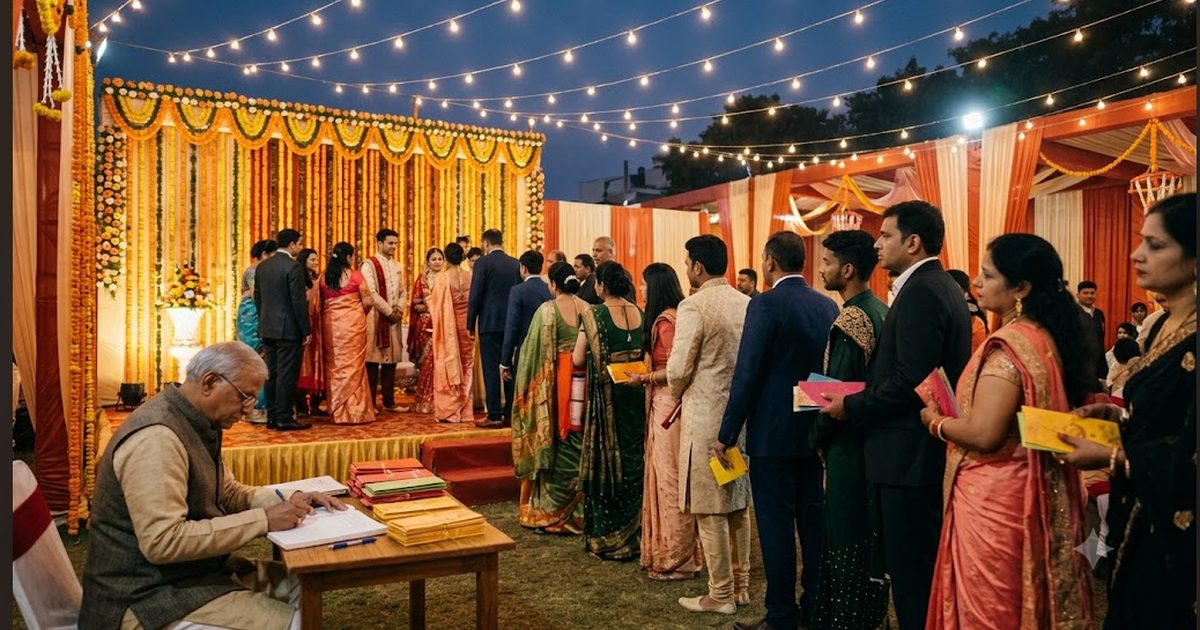
Write your name on the envelope. It matters more here than elsewhere, because guests come from many different villages and a surname alone rarely identifies a household. If you want to think the amount through properly, see how much shagun to give at an Indian wedding.
How families keep the record
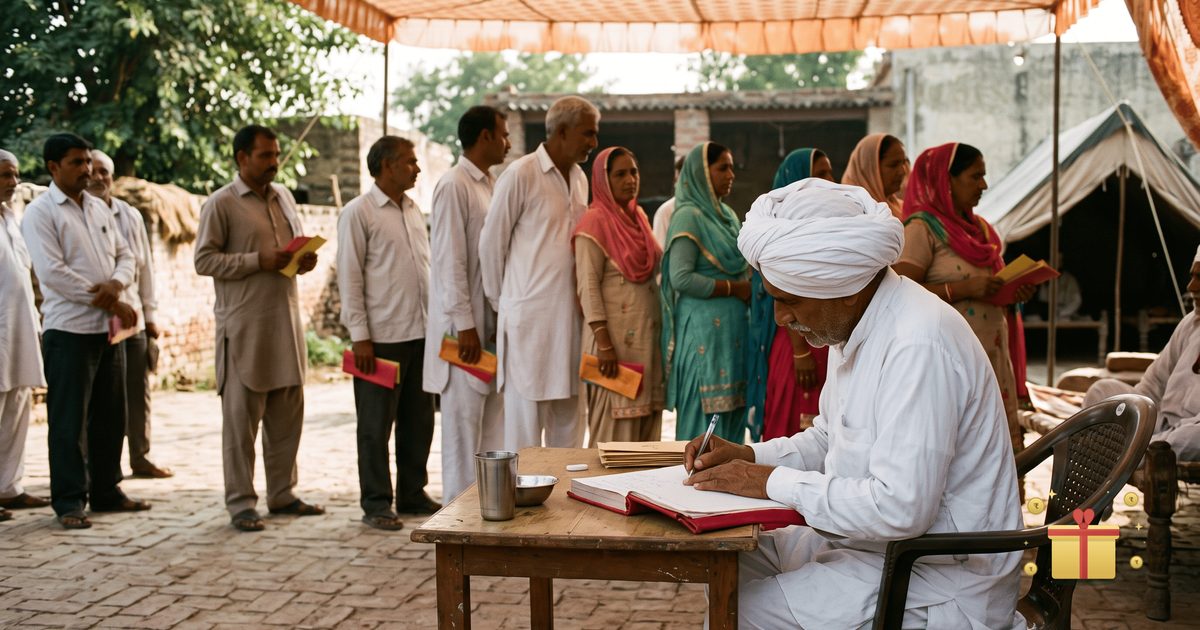
The usual method is a notebook at the wedding house, kept by one relative, with the name, the village and the amount. It works well, and it fails in familiar ways — plus one that is specific to the hills.
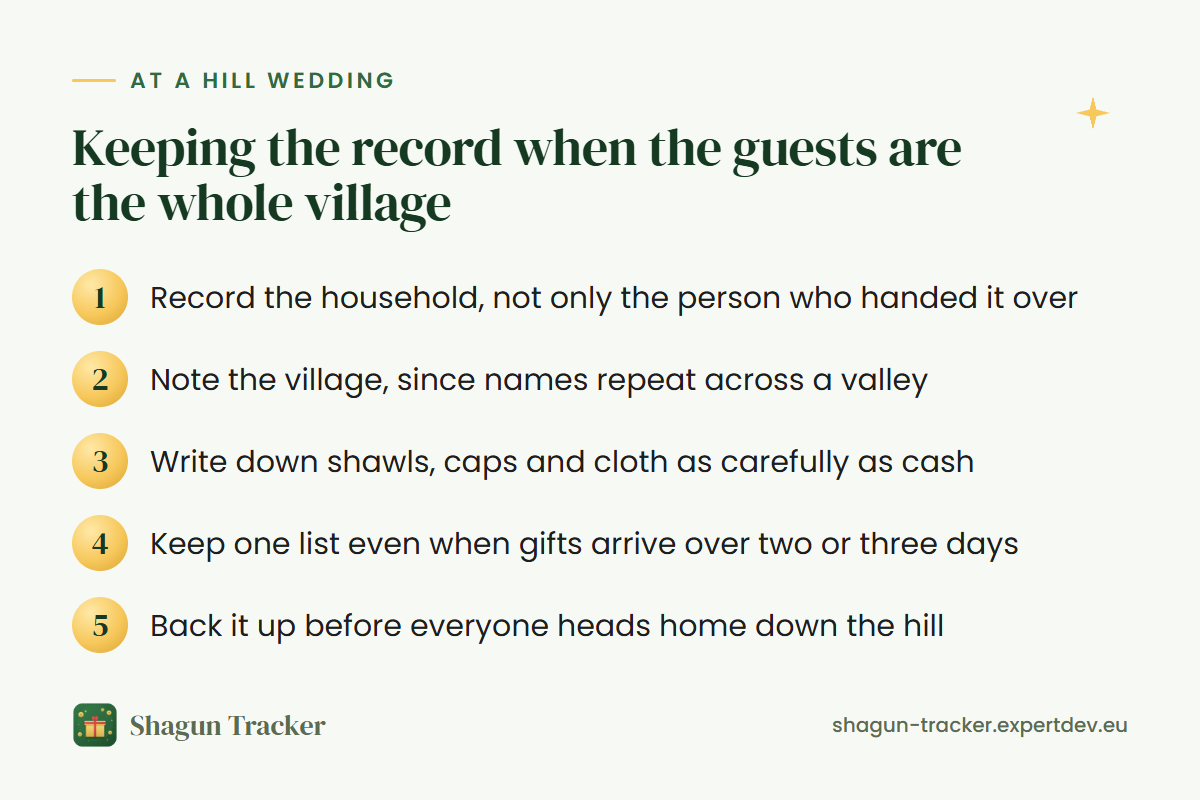
- Names without villages. Half a dozen households in the valley share a surname; the village is what tells them apart, and it is the first thing dropped when the queue grows.
- Unnamed envelopes, unidentifiable by the end of the day.
- Contributions in kind never written down — the milk, the grain, the two days of help — even though these are often the most meaningful part of what was given.
- Gifts arriving over three days rather than one evening, so entries get made in two or three different places and never reconciled.
- The notebook itself, damp, faded or lost, missing exactly when the next function needs it.
Habits that hold up
- One recorder and one list for the whole wedding, across all the days.
- Record at the moment of receiving, not later from memory.
- Always write the village next to the name, without exception.
- Note the relation — maternal side, paternal side, neighbour, friend, colleague.
- Write down help and supplies too, in plain words: "sent milk for three days", "brought rice", "cooked for the dham".
- Copy the record the same week and give it to two other people in the family.
Keeping the record on a phone
Plenty of Himachali families now keep the list on a phone instead, mostly because relatives are scattered between the village, the district town and cities on the plains, and a record that can be sent to them is worth far more than one sitting in a cupboard at home.
Shagun Tracker is made for this. Create an event for the wedding, add each guest with name, village address and relation, and record what they gave — cash, clothes, gold or something else — with a notes line for the things that do not fit a number, like supplies sent or help given. Totals add up as you enter, names can be searched in Hindi or English afterwards, and the list exports as a PDF, CSV or backup file to share with relatives. It works offline, which is the part that actually matters when the wedding house has no network for two days.
Hosts putting the gift table together should also look at the shagun counter checklist for hosts.
Why it is worth writing down
Keeping a record does not make a wedding a transaction. In the hills it does something closer to the opposite: it holds on to the fact that forty households came up a road to be there and did not arrive empty-handed. When their turn comes, the family will want to give back properly rather than guess. The same instinct runs through Garhwali and Kumaoni wedding gifting in Uttarakhand, the neota register custom of Haryana and Punjabi shagun and milni traditions — different clothes, the same idea, and in every case it depends on somebody having written it down.