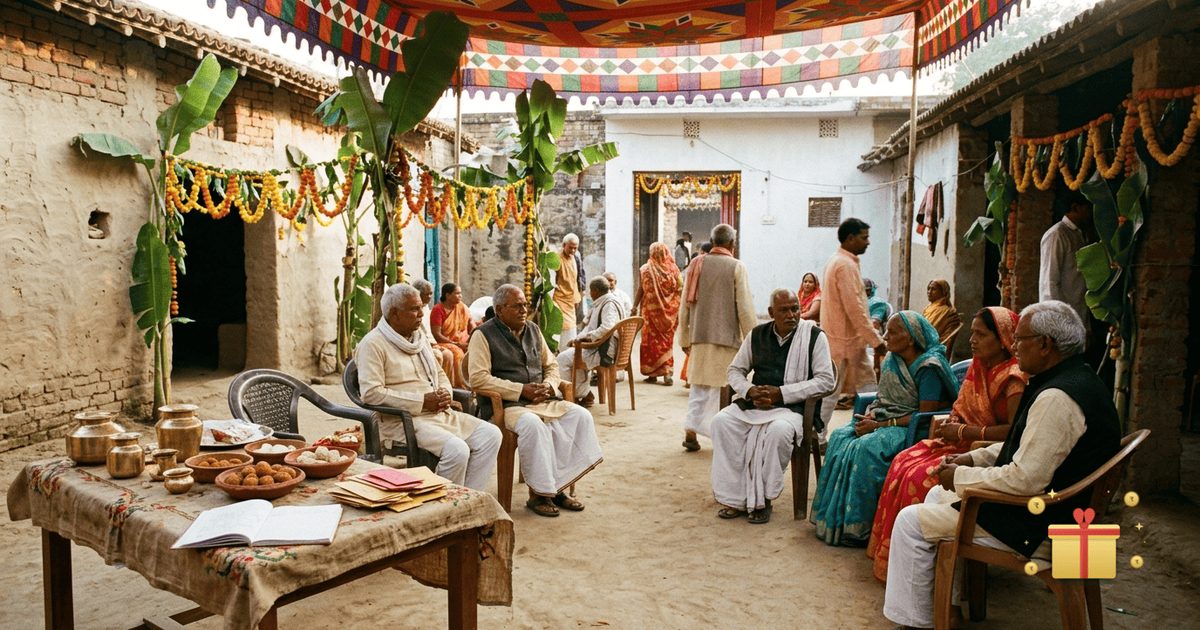
Shagun customs in Uttar Pradesh weddings are not confined to one ceremony. From the tilak at the groom's house to the muh dikhai after the bride arrives at her new home, almost every stage of a UP wedding is marked by something being given — cash in an envelope, clothes, sweets, a piece of jewellery, or a handful of notes pressed into someone's palm in the middle of a joke. For a guest, the question is usually what is expected. For the host family, it is how to make sure all of it gets written down.
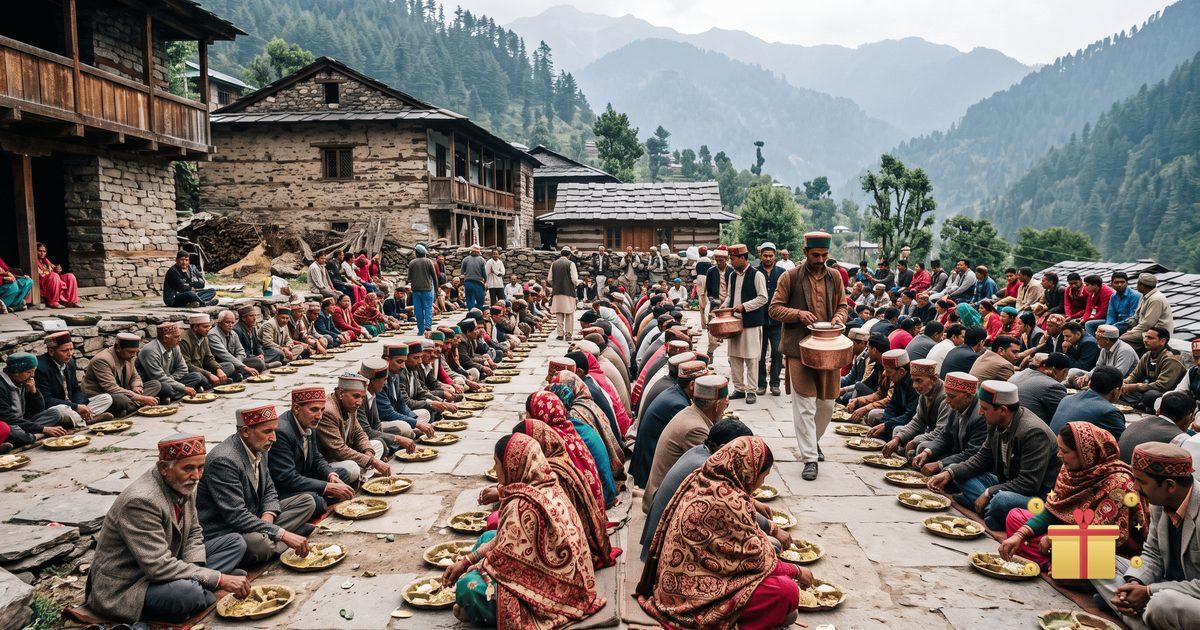
UP is enormous and varies accordingly. A wedding in Braj is not a wedding in Awadh, Bundelkhand or Purvanchal, and communities within the same city follow different scripts. What follows is how these customs are generally practised, with the reminder that your host family's way is the one that counts.
What shagun means here
Shagun is an auspicious gift — a blessing that happens to take a material form. The amount is deliberately odd, ending in one, so that it reads as a beginning rather than a closed sum: ₹101 and ₹501 for small tokens, ₹1,100, ₹2,100, ₹5,100 or ₹11,000 in envelopes at a wedding. Many families keep single-rupee coins on hand for precisely this.
The other thing to understand is that most of this gifting is between households, not individuals. When your family has a function, what you gave is very likely to shape what comes back. This is why older relatives can recall amounts from twenty years ago, and why the register at the gift table is taken seriously.
In a UP wedding, a gift is rarely just a gift. It is a sentence in a conversation between two families that has been going on for a generation and will carry on after this wedding is over.
The occasions where gifts change hands
Roka and sagai
The first formal gifting usually happens when the match is agreed. The two families visit each other with sweets, dry fruit, clothes and shagun, and at the engagement rings are exchanged in front of a wider gathering. This is often the first function with a real guest list, and therefore the first test of whoever is keeping the record.
Tilak
The tilak ceremony is a distinctively north Indian occasion and a central one across much of UP. The bride's father, brothers and close male relatives go to the groom's home, apply a tilak to his forehead and present gifts, formally welcoming him as a son-in-law. It is public and well attended, and the gifting is between the two families rather than from individual guests.
How elaborate tilak is, and what is given, differs a great deal between communities and families — some keep it small and ceremonial, others treat it as a major function in its own right. Both are ordinary.
Haldi, mehndi and sangeet
The pre-wedding functions bring their own smaller gifting: clothes sent between the families, tokens given to the bride and groom by aunts and older relatives, and neg at various points for the people performing particular roles. Individually these are small; collectively they are the entries most often missing from the register afterwards.
The baraat, the wedding and neg
Neg runs right through the wedding day. The women who stop the baraat at the door, the bride's sisters and cousins who hide the groom's shoes and negotiate their return, the relatives who guide a step of the ceremony — each moment has a recognised claim to a small odd amount. Anyone travelling with the groom's party should carry ₹101 and ₹501 notes in an inner pocket, because neg arrives without notice and is no fun to fumble.
Muh dikhai and the visits after
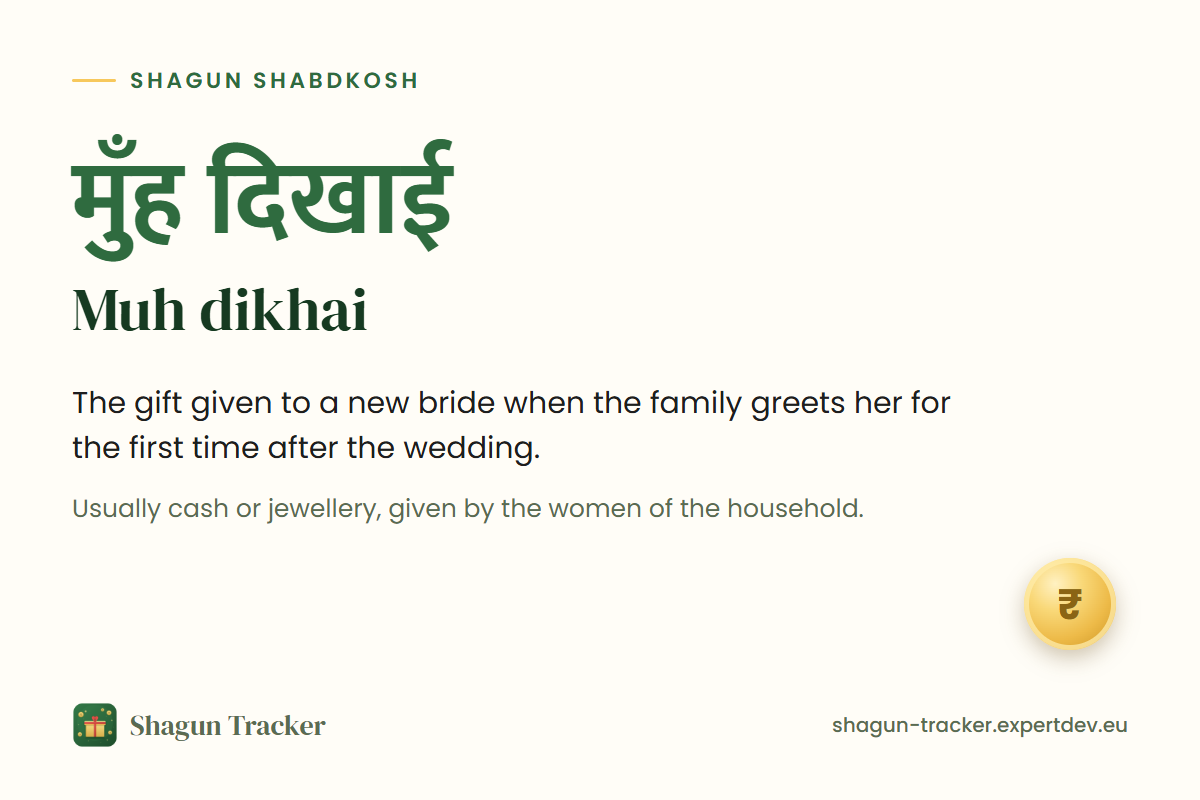
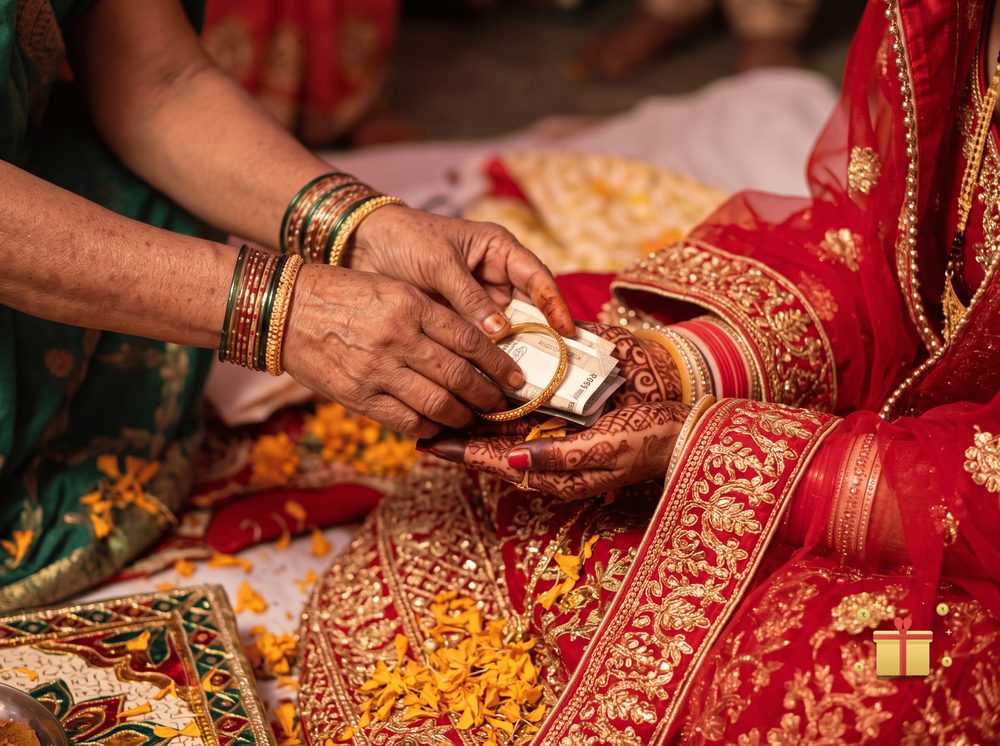
When the bride reaches her new home, the women of the family come to see her face and welcome her, each giving a gift or a token — the mother-in-law first, then the rest. Gifting continues through the visits between the two households in the weeks that follow. These later gifts are significant and are almost never recorded properly, because by then the register has been put away in a cupboard.
What guests usually give
- Colleagues and acquaintances give a modest odd amount that acknowledges the invitation.
- Friends give more, often agreeing a common figure among themselves so nobody is out of step.
- Relatives give according to how close the relationship is, frequently in line with what that family gave earlier.
- The maternal side — mama ji and the mother's family — traditionally gives generously, and in many households this is a matter of pride.
Two practical points outweigh the figure. Write your name on the envelope, because an unnamed envelope leaves the family unable to thank you or return the gesture. And keep the amount odd. For a longer walk-through of the question, see how much shagun to give at an Indian wedding.
How families keep the record
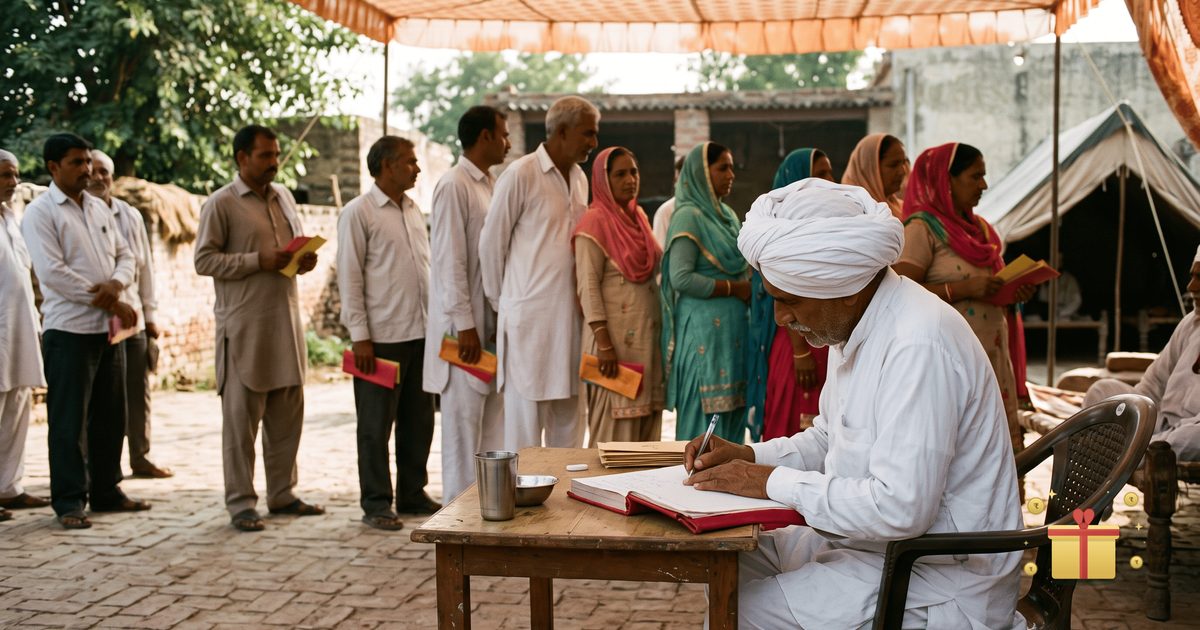
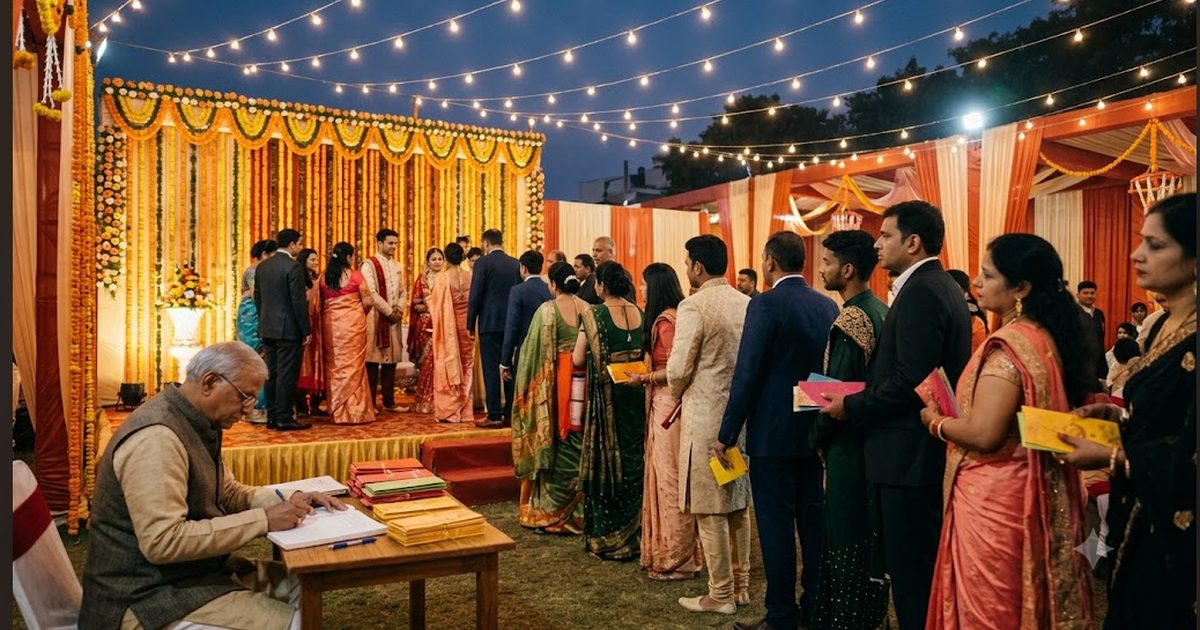
The traditional method is a bound register at the gift table, with a column for the name, the address and the amount, kept by one relative who is trusted with it. It is a good system. It fails in predictable ways:
- Unnamed envelopes. Every wedding produces a stack of them, and none can be identified by midnight.
- Two people writing at once when the queue grows, which creates duplicates and gaps simultaneously.
- Names without addresses. "Sharma ji" is useless in five years; "Sharma ji, Gomti Nagar, colleague" is not.
- Gifts in kind skipped because a saree or a gold chain takes longer to write than a number.
- Neg and muh dikhai never entered at all, because nobody thinks of them as register items until much later.
- The register itself — faded, damaged or lost, discovered missing when the next function makes it relevant.
Habits that make the difference
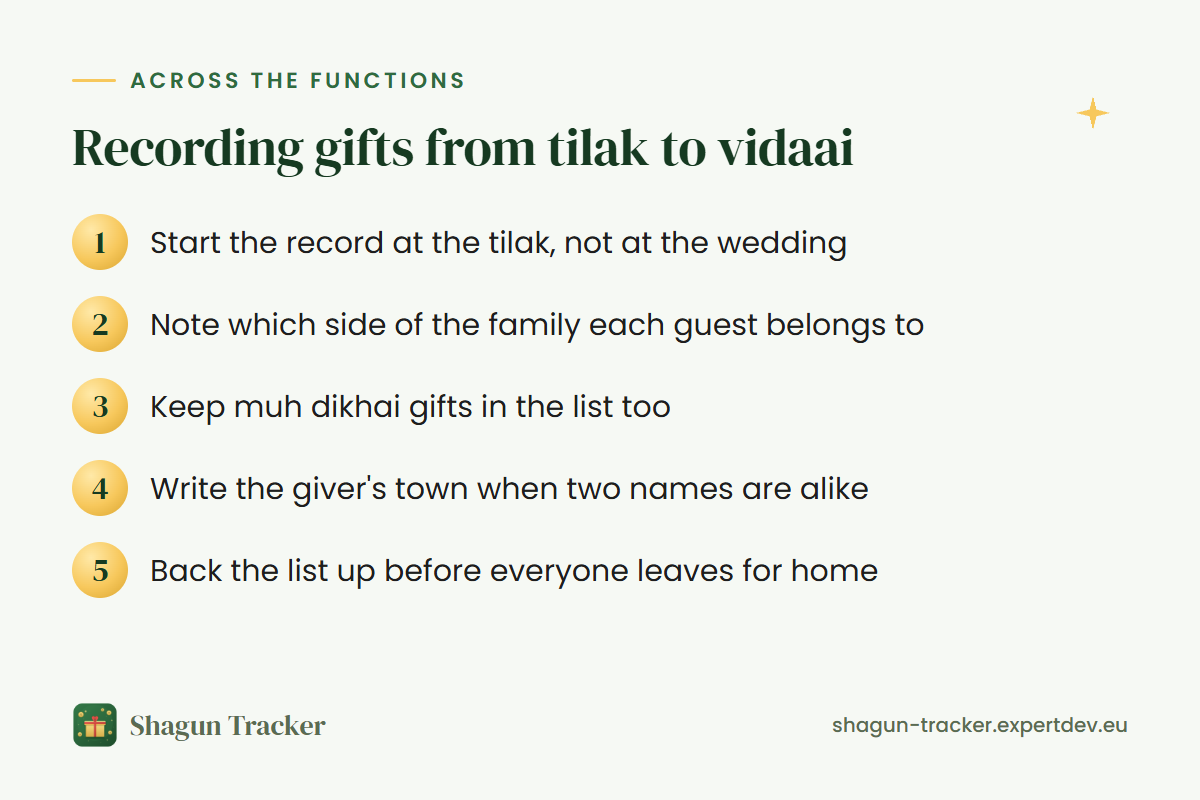
- Decide who is recording before the guests arrive, and send every envelope through that one person.
- Record at the moment of receiving, never from memory at the end of the night.
- Write the address or locality beside every name, without exception.
- Note the relation — maternal side, paternal side, friend, neighbour, colleague.
- Record gifts in kind in plain words: a Banarasi saree, a gold ring, a dinner set.
- Keep the record open for a fortnight after the wedding, so muh dikhai and the later visits get in too.
- Copy it the same week and give the copy to two other people in the family.
Keeping the list on a phone
Many families have moved the register to a phone, for practical reasons rather than novelty: it is already in your hand at the table, it adds up as you go, and a name can be found in seconds rather than by turning pages.
Shagun Tracker is built for exactly this. Make an event for each function — tilak, the wedding, the reception — add each guest with name, address and relation, and record what they gave: cash, clothes, gold or something else, with a notes line for context. Totals update as entries go in, you can search a name in Hindi or English afterwards, and the list exports as a PDF, CSV or backup file to share with relatives. It works offline, which is what you want in a marriage hall with no signal.
Hosts organising the gift table itself should look at the shagun counter checklist for hosts before the day.
Why the record matters
None of this turns a wedding into an account book. The record exists so that when the family that stood with you has its own function — a wedding, a mundan, a griha pravesh — you know exactly who came and what they gave, and you can return it properly instead of guessing. The same instinct runs through the neota register custom of Haryana and Punjabi shagun and milni traditions. In UP it usually goes by the plain word vyavhar, and it only works if somebody wrote it down.