Deciding how much shagun to give at an Indian wedding is the one part of attending a wedding that nobody explains to you. The card tells you the date and the venue. It does not tell you whether ₹1,100 will look thoughtless or ₹11,000 will look like showing off. Most people end up guessing, or asking a friend who is also guessing.
There is no fixed rate, and there never has been. But there is a sensible way to arrive at an amount, and it comes down to four questions: how close are you to this family, where is the wedding, what did they give you, and what is normal in your own circle. Work through those and the figure almost picks itself.
Start with the relationship, not the wedding
The single biggest factor is how close you are to the family, and specifically to the person who invited you. A five-star venue does not oblige you to give more; your relationship does. A colleague's wedding at an expensive hotel still gets a colleague's shagun.
Roughly, in increasing order: acquaintances and neighbours, colleagues, friends, extended relatives, close relatives, and immediate family with the maternal side of both bride and groom usually giving the most of all. In many communities the bride's and groom's mama or maternal uncle is expected to give significantly and does so as a matter of pride, which is a family responsibility rather than a guest's.
Then adjust for the city
The same relationship maps to different amounts in Mumbai, Chandigarh, Coimbatore and a district town, for the plain reason that everything else costs differently. A friend's shagun in a metro is usually a step above what the same friendship would mean in a smaller city. If you have moved cities, take the cue from the city the wedding is in, or from what the rest of your group is giving.
Check what that family gave you
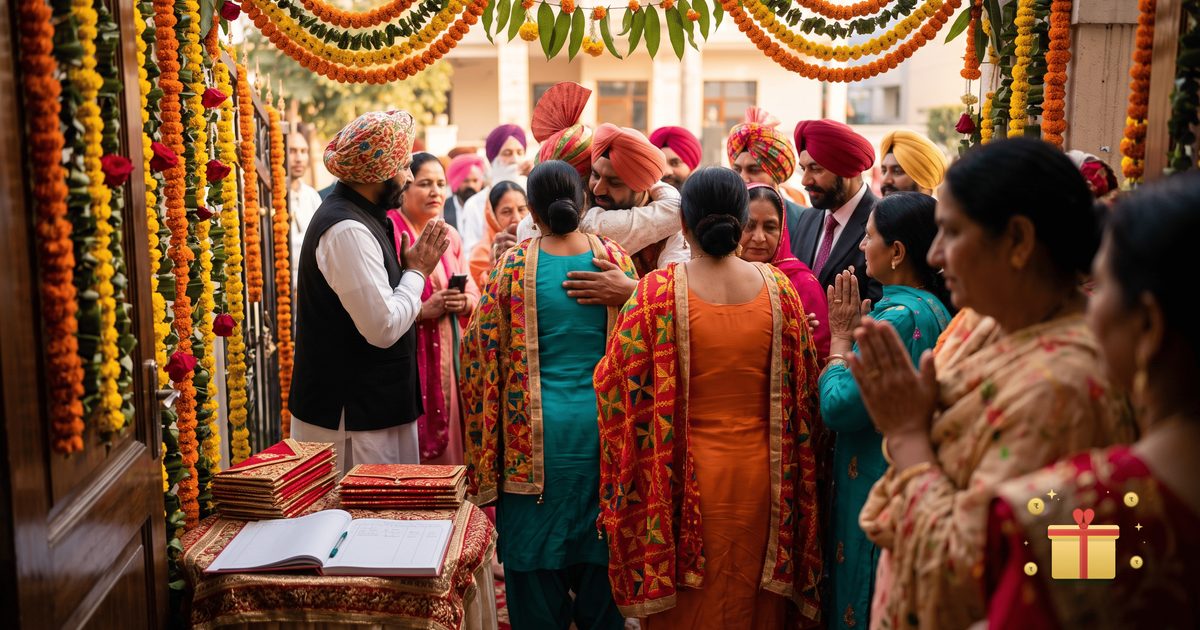
This is the part outsiders miss and families never forget. Gifting at Indian weddings is reciprocal. If that family gave your family a certain amount at your sister's wedding or your son's engagement, the expectation in most communities is that you return at least that, and often a little more. This is exactly why families keep a register, and why the notebook comes out before the envelope does.
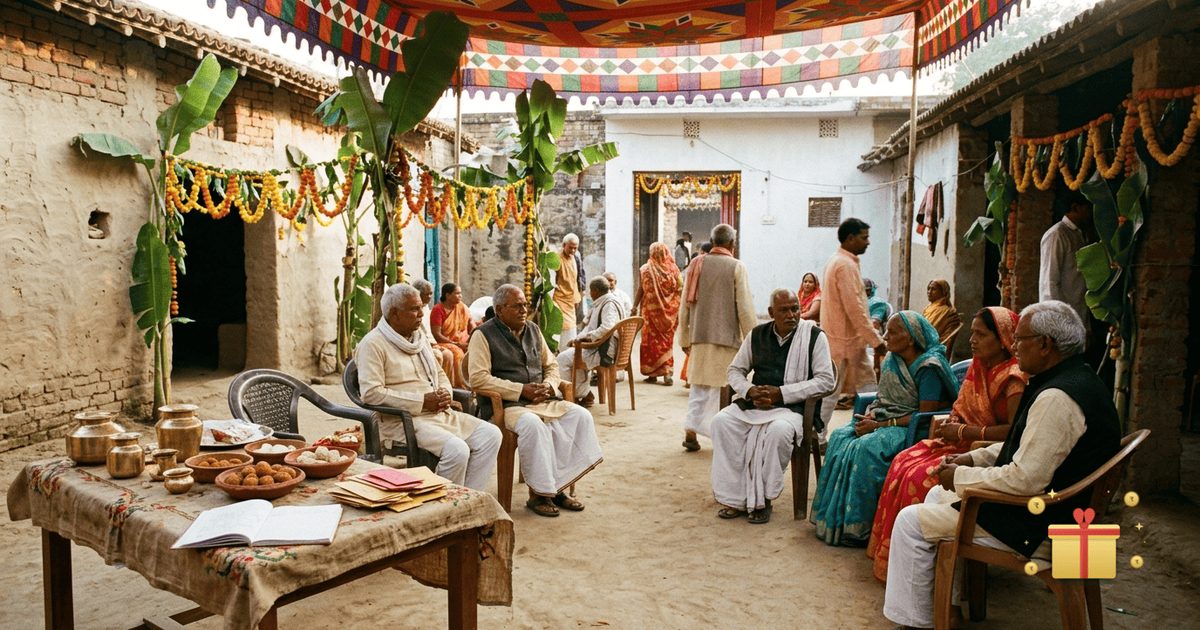
The custom has different names in different places, the same logic in all of them: neota in Haryana, vyavhar in much of the North, moi in Tamil Nadu where it is written and sometimes read out, chandlo among Gujarati families. If your family keeps such a record, look at it before deciding. If you cannot find it, ask an elder; somebody usually remembers.
The most reliable answer to "how much should I give" is a line written in a notebook at your own function five years ago.
What people commonly give
The table below is not a rate card. These are ranges people commonly use, and they shift a great deal with city, community, income and how well you actually know the family. Treat them as orientation when you have nothing else to go on, and override them freely when you do.
| Who you are to them | Range commonly used | Notes |
|---|---|---|
| Colleague or acquaintance | ₹1,100 to ₹2,100 | Often agreed as a common amount across the office. A group gift is normal. |
| Friend | ₹2,100 to ₹5,100 | Friend groups usually settle on one figure so nobody is out of step. |
| Cousin or extended relative | ₹5,100 to ₹11,000 | Heavily influenced by what the two families have given each other before. |
| Close relative | ₹11,000 and above | Often combined with a gift in kind such as clothes or jewellery. |
Two caveats worth stating plainly. First, giving less than a table like this suggests is not an insult; giving beyond your means to match someone else is the actual mistake. Second, in many circles the numbers run well above these, and in many others well below. Neither is wrong.
Why the amount ends in ₹1
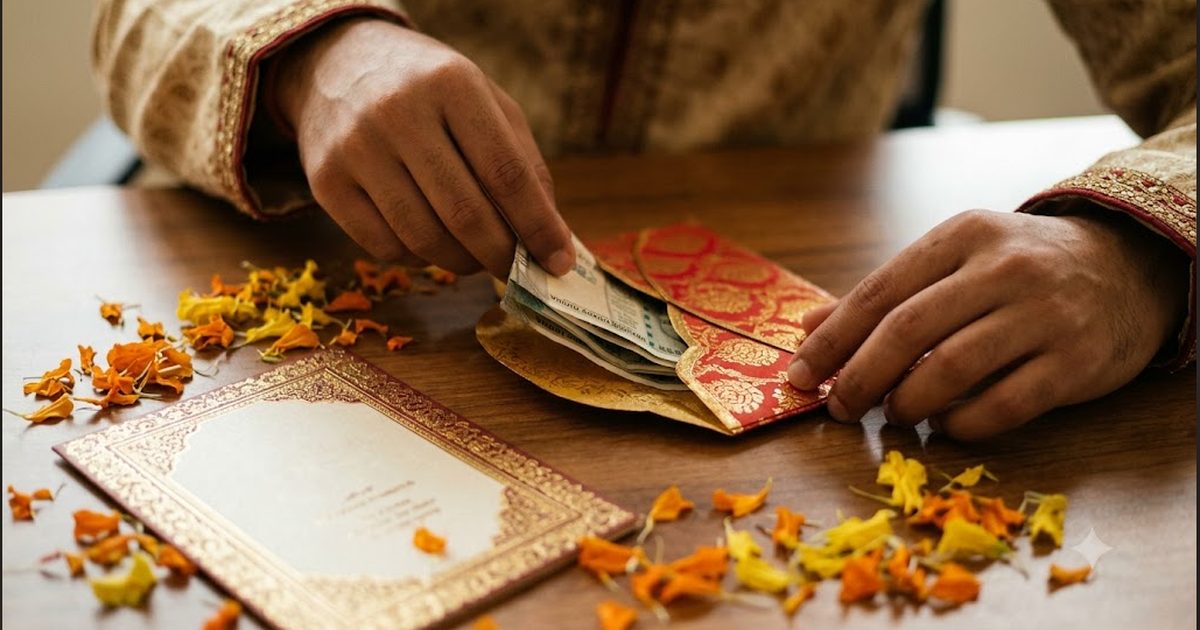
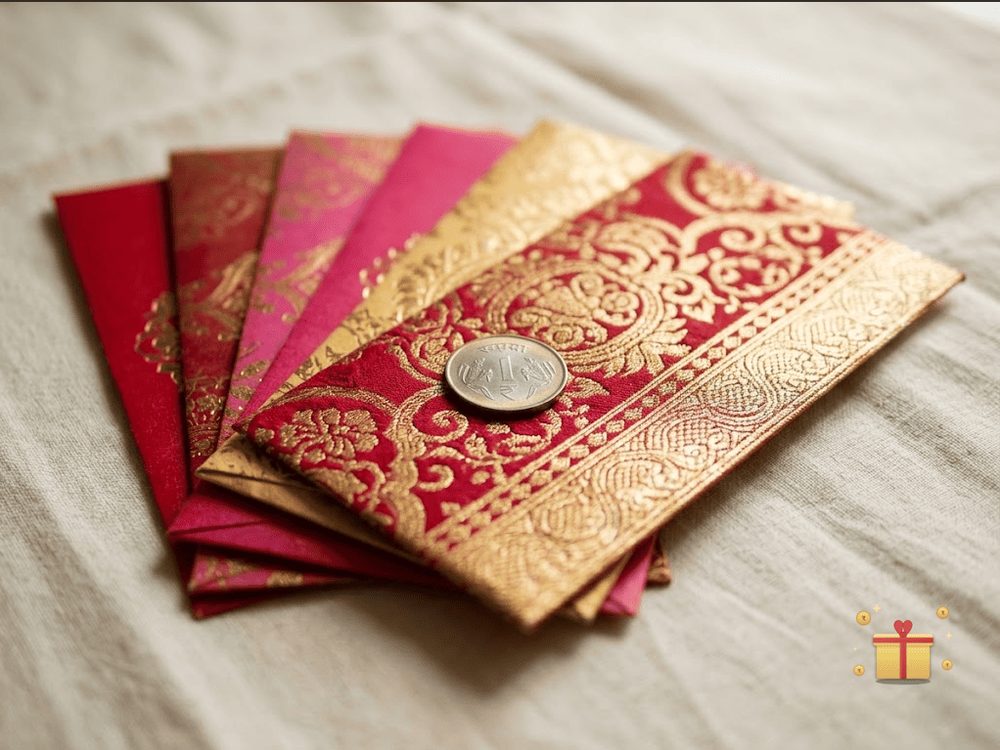
Almost every shagun figure is odd and ends in one: ₹101, ₹501, ₹1,100, ₹2,100, ₹5,100, ₹11,000. The reason is that a round number reads as complete and closed, while the extra rupee leaves it open, a beginning rather than a full stop. The relationship, and the blessing, is meant to continue. It is why families keep ₹1 coins for the purpose and why envelopes are often sold with a coin already stuck on the front.
If you are giving digitally, keep the odd rupee anyway. ₹5,101 sent by UPI carries the same idea as ₹5,100 plus a coin in a lifafa.
Etiquette that matters more than the amount
- Write your name on the envelope. First and last name, and something identifying if your name is common. An unnamed envelope cannot be thanked or returned, which quietly breaks the whole custom.
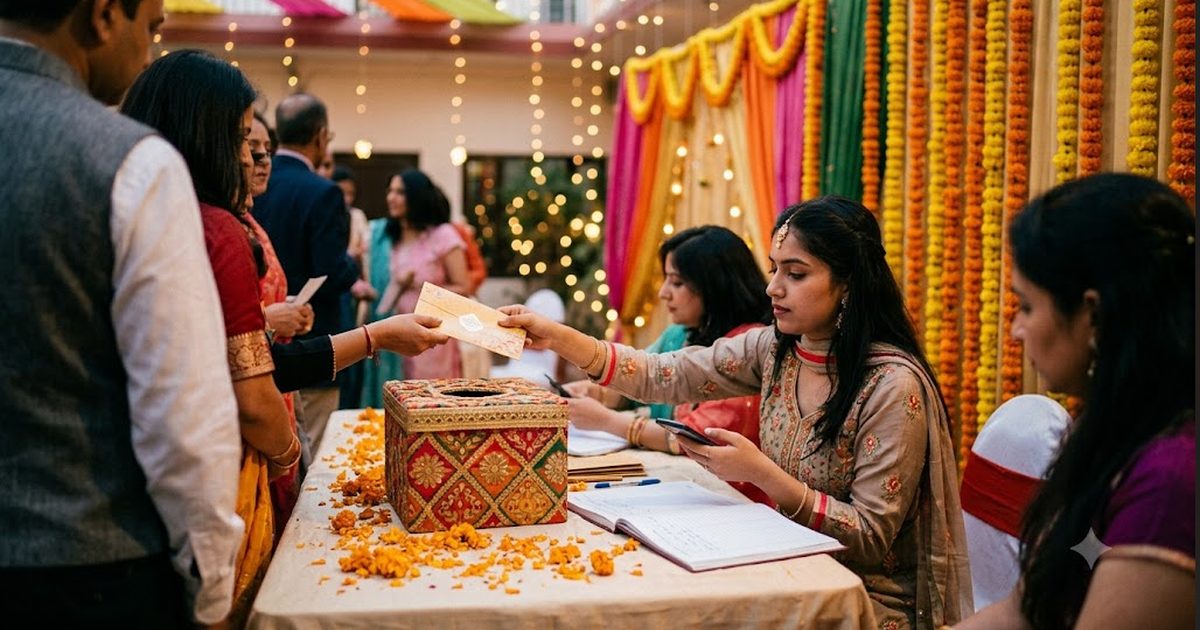
- Hand it to the right person. Look for the gift table or ask a family member. Handing cash to the couple on stage is common at some weddings and awkward at others.
- Do not announce the amount. Unless the function is one where amounts are read out by custom, keep it between the envelope and the register.
- If you send it by UPI, tell someone. A transfer that nobody links to your name is the easiest gift in the world to lose.
- One amount per household. You are not paying for your plates, whatever the internet says about covering your cost. That is not how shagun works.
- If you cannot attend, still send it. Send it before or soon after the wedding with a message; the gesture is what registers.
- Gifts in kind count. Clothes, silver, jewellery or a household item are entirely appropriate, alone or with a smaller envelope, and are especially normal from close relatives.
How families keep the record
Everything above depends on somebody, at some point, having written it down. When you give, the host family's record is what lets them thank you properly and return the gesture years later. When you host, your own record is what tells the next generation what to give.
Traditionally this is a register at the gift table with a line per guest: name, address or village, relation, and what they gave. It works well as long as one person is writing, entries go in as gifts arrive, non-cash gifts are described in words, and the pages get copied before the ink fades or the notebook is lost in a house move. If you are the one running the table this year, our shagun counter checklist for hosts covers the whole evening step by step.
Many families now keep the same list on a phone. Shagun Tracker was built for it: an event per function, an entry per guest with name, address and relation, and whatever they gave recorded against it, whether cash, clothes, gold or something else. Totals update as you go, you can search a name in Hindi or English afterwards, and the list exports as a PDF or spreadsheet to share with relatives. It works offline, which matters in a banquet hall with no signal.
The short version
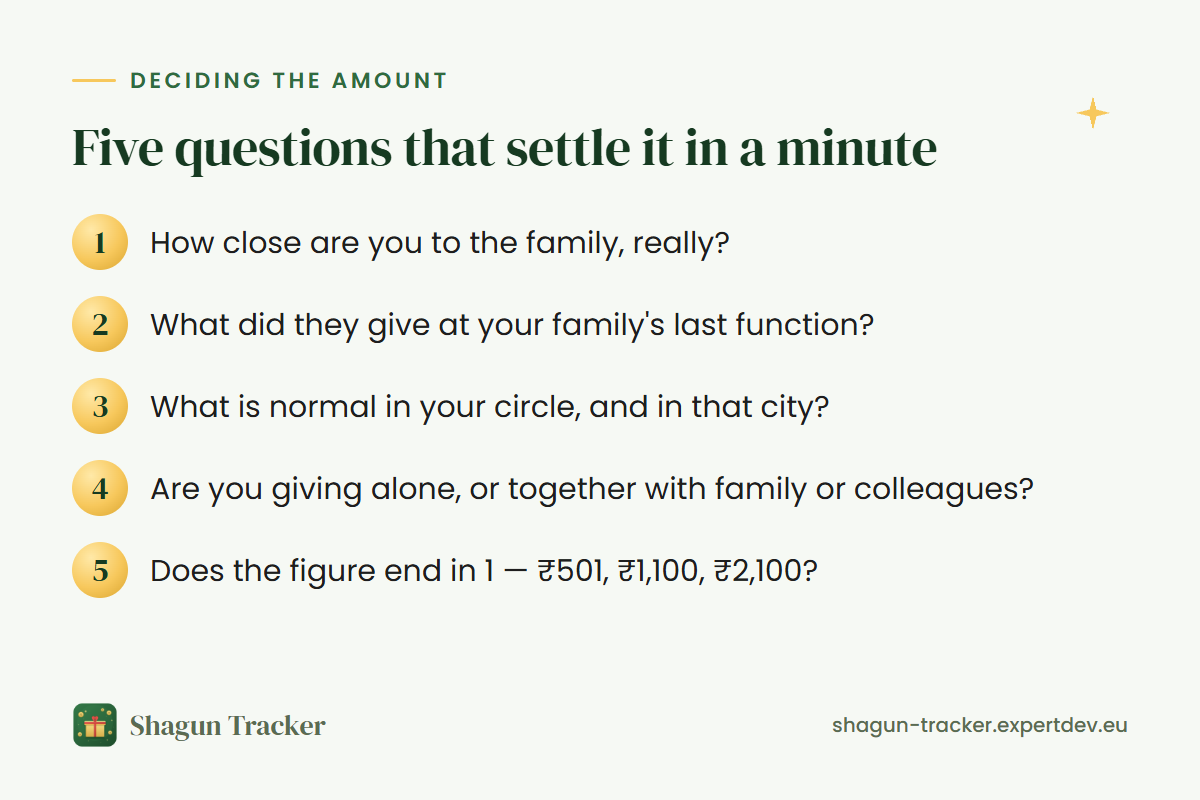
- Decide from the relationship, not the venue.
- Adjust for the city and for what your own circle is giving.
- Check what that family gave you, and at least match it.
- Make it an odd figure ending in one.
- Put your name on the envelope.
Get those five right and the exact number matters far less than you think. Nobody remembers whether it was ₹2,100 or ₹5,100. They remember that you came, and that your name was on the list.