At a Tamil wedding, the cash gift a guest brings has its own name, its own table and its own notebook. Moi (மொய்) is the money or gift given to the host family at a wedding, a housewarming, an ear-piercing or a funeral, and what makes it distinctive is that it is written down as it is received. The writing is not an afterthought. It is part of the custom itself.
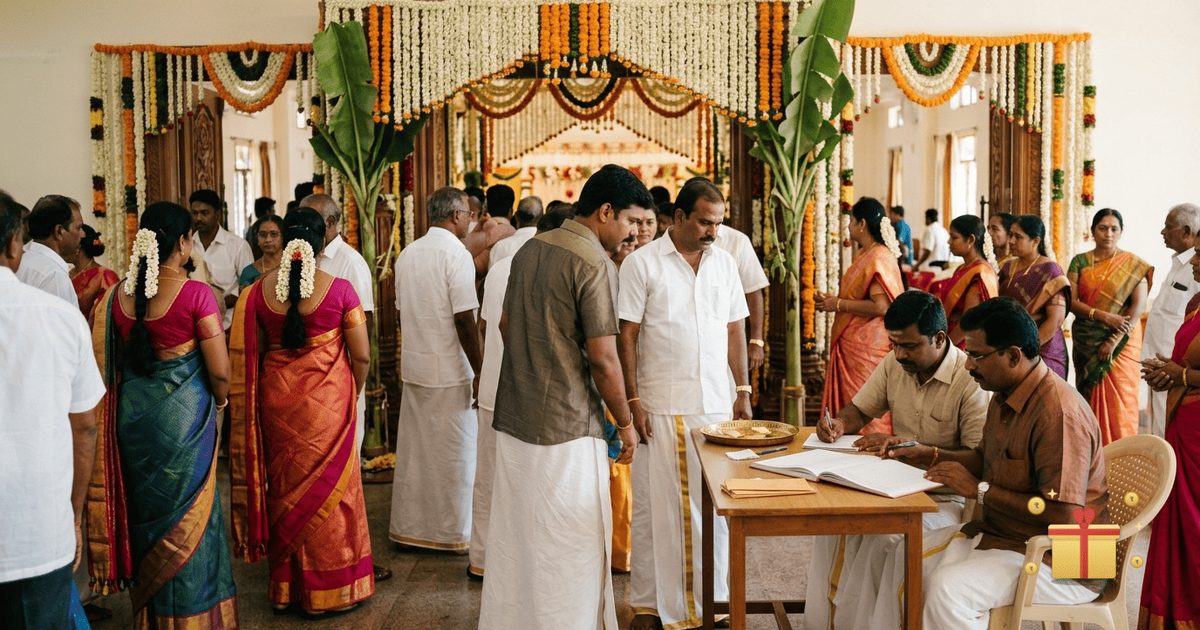
If you have ever seen a man sitting with a long ruled notebook near the entrance of a Tamil wedding hall, one hand taking an envelope and the other writing a line, you have seen moi ezhuthu in progress. This guide explains what moi means, where it is given, how much people usually give, and how families keep the register so it is still useful ten years later.
What moi means, and why it is written down
Moi is best understood as support rather than a present. A wedding is expensive, and the community steps in with money that helps carry the cost. The giving is open rather than private, and the record is what makes it work: because it is written down, the host family knows exactly what was given, and can return the same or more when the giver has a function.
That reciprocal thread is the heart of it. A moi book is not an account of who owes whom; it is the family's memory of who stood with them. Elders will pull out a notebook from an earlier wedding before deciding what to give at a cousin's function, and the line written twenty years ago decides what goes into the envelope today.
The moi notebook outlives the wedding. The photos get put away, the hall is booked by someone else the next week, and the one thing the family keeps on a shelf is the book with the names in it.
Moi ezhuthu: how the writing actually works
The arrangement varies from family to family, but the shape of it is fairly consistent.
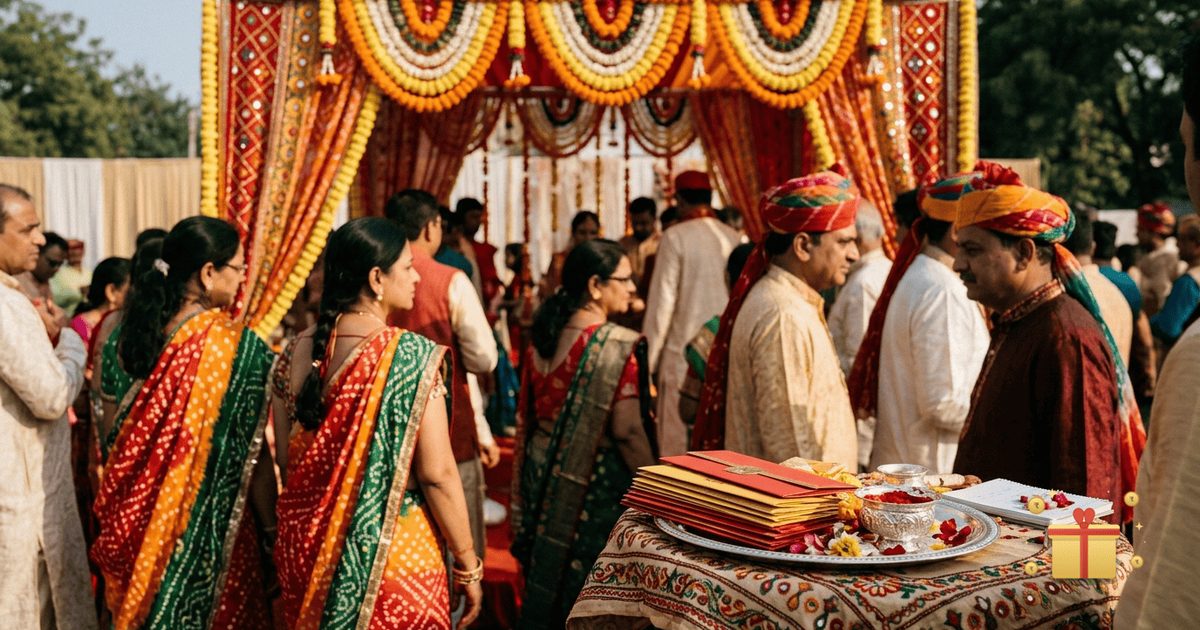
- A table and a trusted person. The moi table usually sits near the entrance or beside the dining hall. The writer is often an uncle, a cousin or a family friend who knows enough of the guests to place a name correctly.
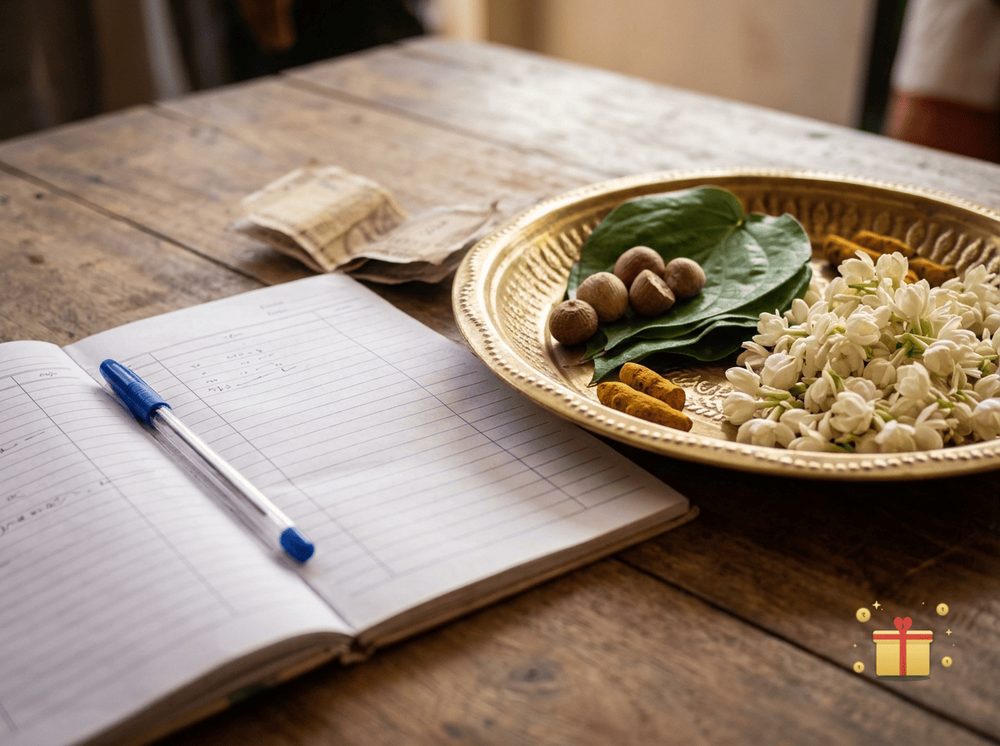
- The book. A long ruled notebook, one line per guest: name, the village, town or area they come from, and the amount. Sometimes the relationship or the person who invited them is added.
- The envelope. Money is handed over in an envelope or, increasingly, sent by UPI and shown on a phone screen. Either way it goes into the book.
- Reading it out. At many village functions the name and amount are announced over the microphone as they arrive, so the whole gathering hears the moi being given. This is a local practice, not a rule. Plenty of families, especially in cities, prefer to write it down without announcing anything, and some avoid announcing amounts on purpose.
Practice differs by district, by community and by family. A wedding in a Thanjavur village and a wedding in a Chennai banquet hall may both call the gift moi and handle it quite differently.
Moi virundhu
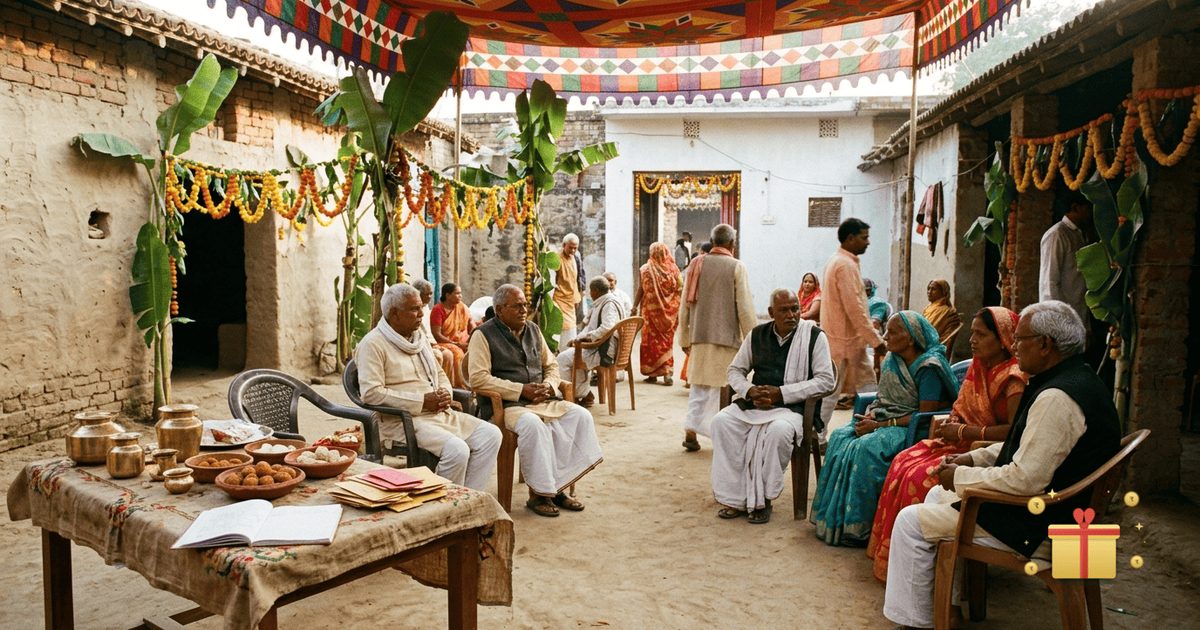
Moi virundhu is the practice most often associated with parts of the Thanjavur and Pudukkottai region: a host lays on a community feast, guests come and give moi, and every contribution is recorded. The point is to raise a sum that helps the host meet a heavy expense, with the shared understanding that each giver will be repaid in kind at their own feast later. There is no paperwork beyond the register and no security beyond the relationship, which is exactly why the register is taken so seriously.
Where moi is given
Nichayathartham
At the engagement, the two families meet formally, the match is confirmed and gifts are exchanged. Guests here are usually close relatives, so the list is smaller but the amounts are often larger.
The wedding day
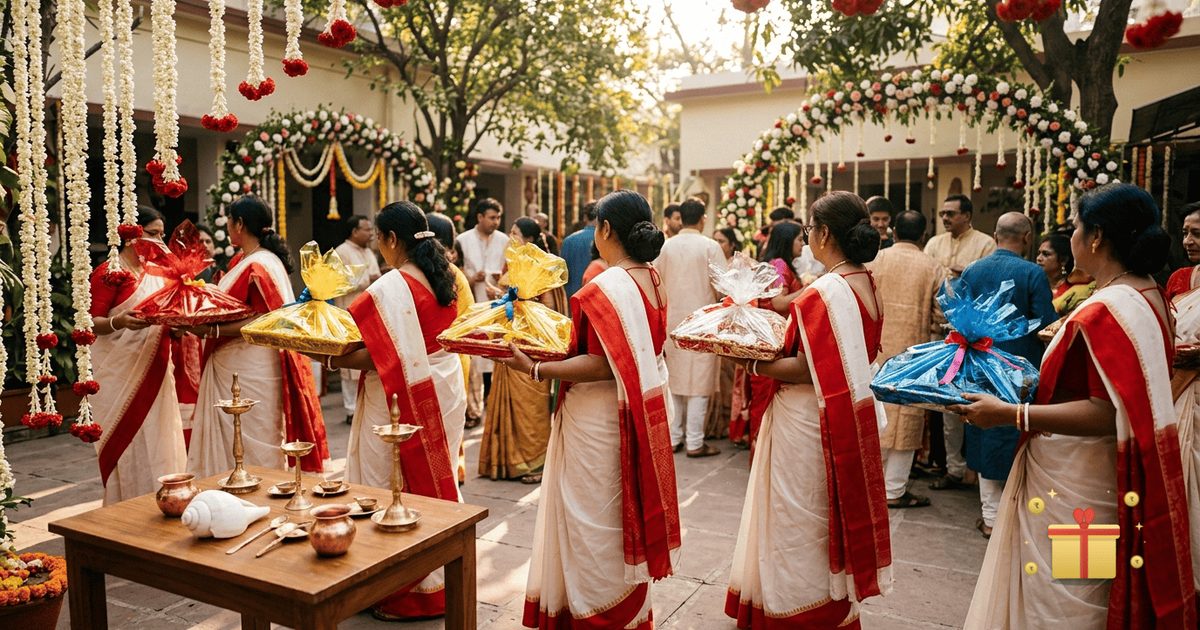
This is where the bulk of the moi arrives. Guests come in waves, most of them around the muhurtham and the meal, and the moi table is busy for a few concentrated hours.
Reception
Many families hold the reception the previous evening. Guests who cannot attend the early-morning muhurtham give their moi here instead, which means the same wedding can have two separate gift tables on two days.
Other functions
Moi is not only for weddings. Griha pravesham, valaikaappu, kaathu kuthal and funerals all involve the same custom of giving and recording, and the same notebook logic carries across them.
How much moi do people usually give?
There is no fixed figure, and any number presented as a rule is really just one family's habit. What generally shapes the amount:
- Closeness. Immediate family and the maternal side give the most, then close relatives, then friends, then colleagues and acquaintances.
- What was given before. If that family gave your family a certain amount at your daughter's wedding, most people return at least the same. This is where the old notebook gets consulted.
- Where you live. Amounts in Chennai, Coimbatore or abroad tend to run higher than in a smaller town, simply because everything else does.
- How many are coming. A family attending together usually gives one amount from the household rather than one per head.
Odd figures ending in one are common across India and widely used here too: ₹101 or ₹501 as a token, ₹1,100 or ₹2,100 from friends and colleagues, ₹5,100 or ₹11,000 from close relatives. If you want a fuller breakdown by relationship and city, read our guide on how much shagun to give at an Indian wedding. For how the same idea plays out in other Southern communities, see South Indian wedding gift customs.
How families keep the record
A moi book only earns its keep if it is legible, complete and findable years later. The problems are always the same ones:
- Unnamed envelopes. Somebody hands one over in a rush, it goes into the box without a line in the book, and by midnight nobody can say whose it was.
- Two writers, one wedding. When the queue builds up a second person starts writing on a loose sheet, and half the entries end up somewhere else.
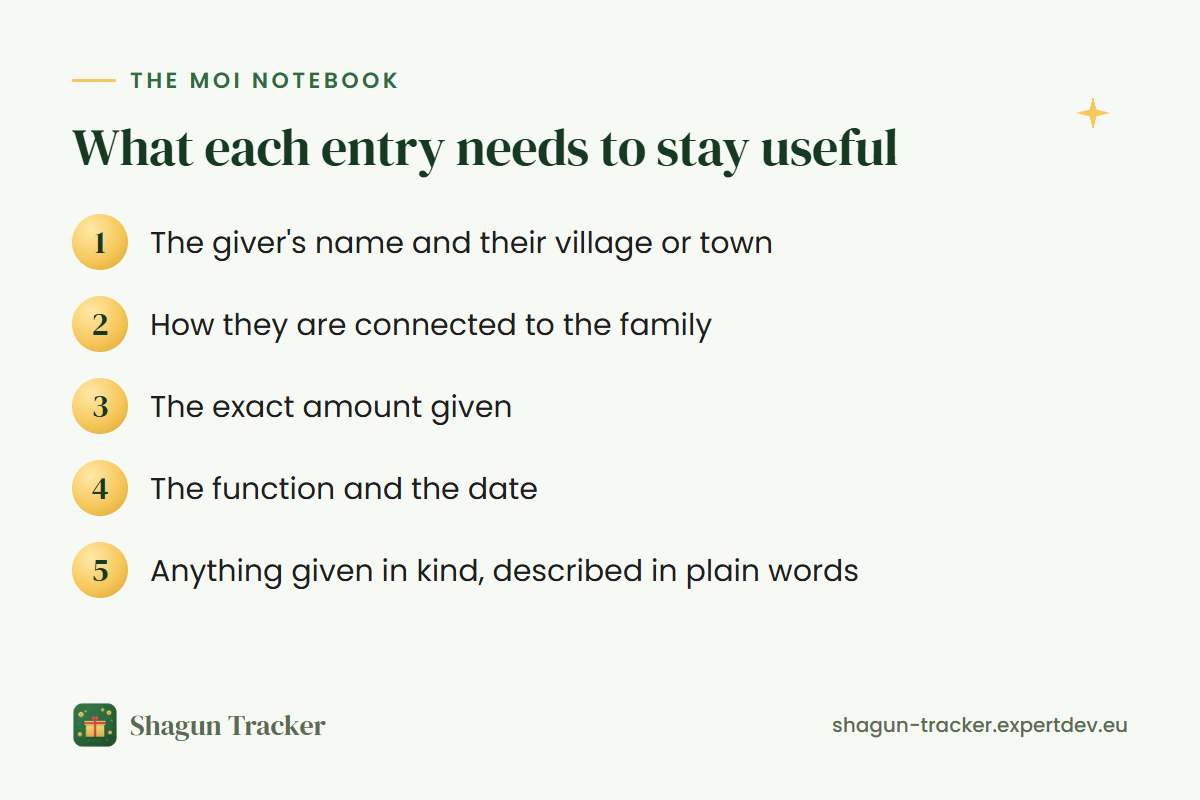
- Names without a place. "Murugan" is not an entry. "Murugan, Karaikudi, father's side" is.
- Non-cash gifts. A silk saree, a gold chain or a vessel set takes longer to write down than a number, so it quietly gets skipped.
- The notebook itself. Ten years of damp, a house move, or ink that has faded to nothing, and the record is gone right when the next wedding makes it matter.
Habits that keep the book usable
- Decide before the function who is writing, and route every envelope to that person.
- Write at the moment of receiving, never from memory at the end of the night.
- Record the place and the relation, not just the name.
- Note gifts in kind in plain words, so they are not lost from the record.
- Make a copy within the week, and give it to a second person in the family.
Keeping moi on a phone
More families now keep the moi list on a phone, for practical reasons rather than fashion. The totals add themselves, two people are not writing two versions, and searching a name afterwards takes seconds instead of a page-by-page hunt.
Shagun Tracker is built around this exact job. You create an event for the function, add each guest with name, address and relation, and record what they gave, whether that is cash, clothes, gold or something else. Search works across Hindi and English, the list sorts by name or amount, and the whole thing exports as a PDF or a spreadsheet to share with the family. It works offline, which is what you need in a hall with no signal. If you already have an old register on paper, its Scan Register feature can read a photographed page and let you check each line before saving; that part needs internet and your own free Google Gemini API key, added in settings.
Why the record is the custom
It is tempting to treat the notebook as bookkeeping attached to a wedding. It is closer to the opposite: the custom is the record. The reason moi is written, and in some places read aloud, is that giving is meant to be seen, remembered and returned. The same reciprocal thread runs through gifting in other regions too, from shagun in a Punjabi wedding to neota in Haryana. Keep the register properly and you are not being businesslike about a wedding. You are doing the part of the custom that everyone else is trusting you to do.