Aher in a Maharashtrian wedding is one of those customs that is everywhere and rarely explained. A saree is placed in an aunt's hands; a dhoti and a coconut go across to the other side; an envelope is tucked under a folded blouse piece. Nobody announces it, and yet almost everyone in the hall knows roughly who gave what to whom. That running, unspoken account is what aher is.
If you are attending a Marathi wedding, you mostly need to know what is expected of you and when. If you are hosting one, you have the harder problem, because gifts arrive in cloth as often as in cash, and cloth is much easier to lose track of. This guide covers both.
What aher means, and why it is not just a present
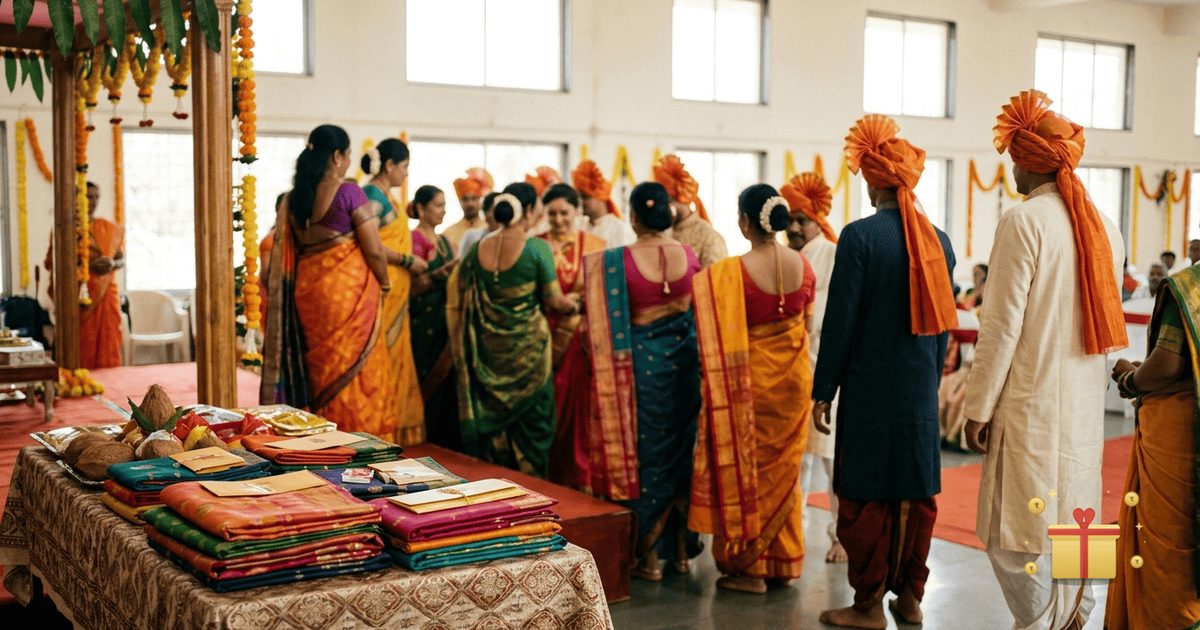
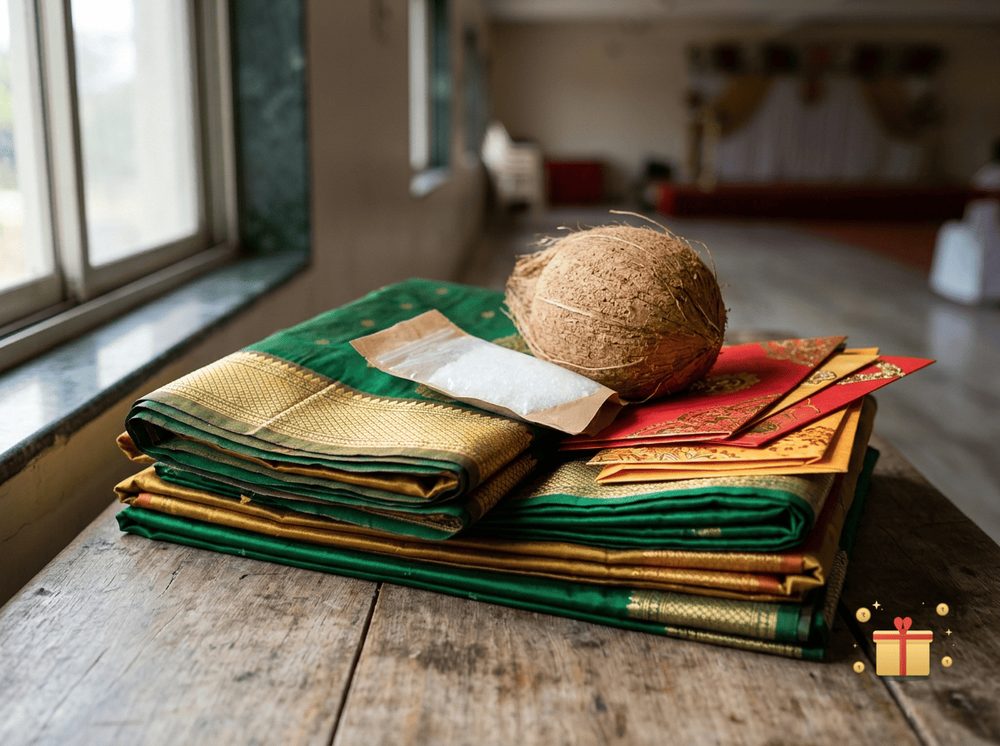
Aher is formal gifting between families. The typical form is clothing — a saree with a blouse piece for the women, a dhoti, shirt piece or kurta for the men — often accompanied by a coconut, sweets, and an envelope. What makes it aher rather than a gift is the direction of it. It moves between two households, it is given in front of people, and it is expected to come back at the other family's next function.
The cash side follows the same logic as elsewhere in India. Amounts end in one — ₹101, ₹501, ₹1,100, ₹2,100, ₹5,100, ₹11,000 — so that the figure reads as an opening rather than a closed sum.
How aher is done varies a great deal. Deshastha, Konkanastha, CKP, Maratha, Malvani and Vidarbha families each have their own habits, and within any of them one family will do it more elaborately than the next. Nothing here is a rule.
Where gifting happens in a Marathi wedding
Sakhar puda
The engagement, also called vangnishchay in many families, is where the two sides formally agree. Sugar is exchanged, and with it clothes and jewellery for the bride and groom. This is usually the first function with a real guest list, which makes it the first genuine test of whoever is keeping the record.
The gifting at home before the wedding
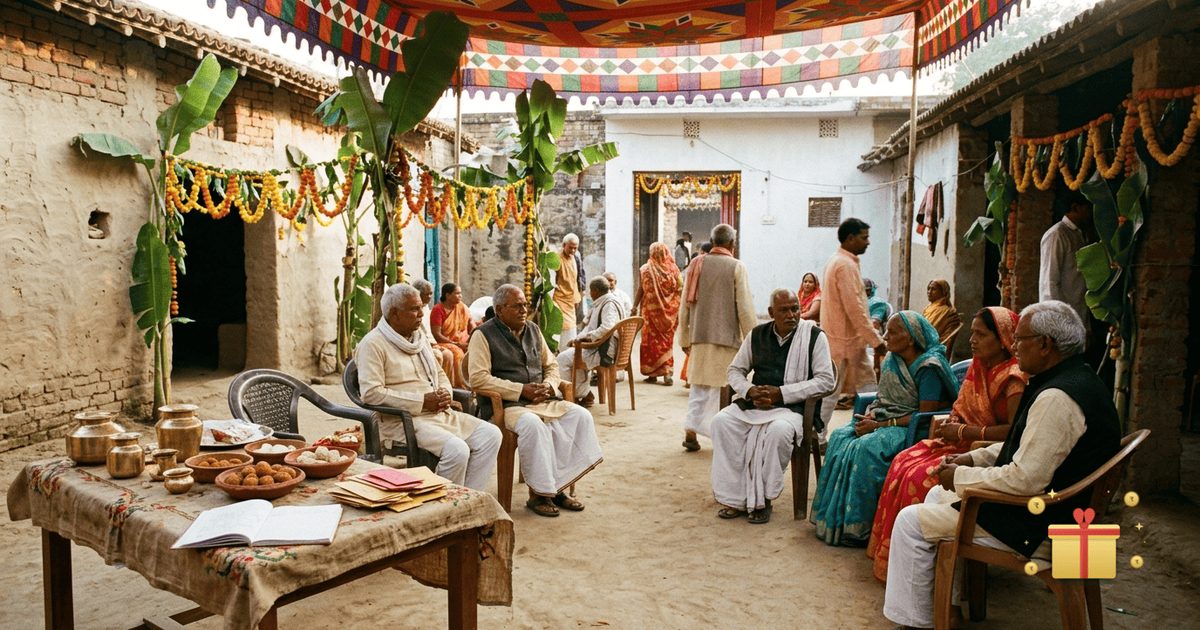
In the days leading up to the wedding, close relatives gather at each home and the family's own gifts are given to the bride or groom — clothes, jewellery, sometimes silverware. These are intimate, unhurried functions, which is exactly why they go unrecorded: there is no table, no queue, and nobody thinks to write anything down.
The wedding day
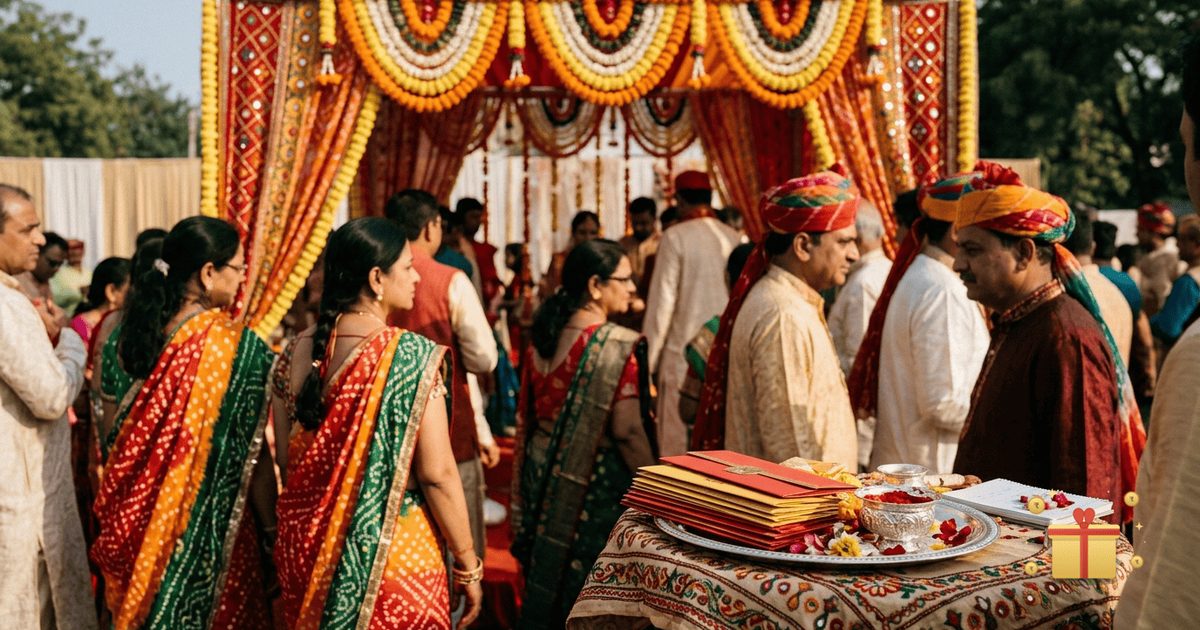
The ceremony itself carries its own small exchanges, and the families of both sides gift each other openly. In many households the aher for the other side's close relatives is planned days in advance, saree by saree, so that nobody is missed.
The reception
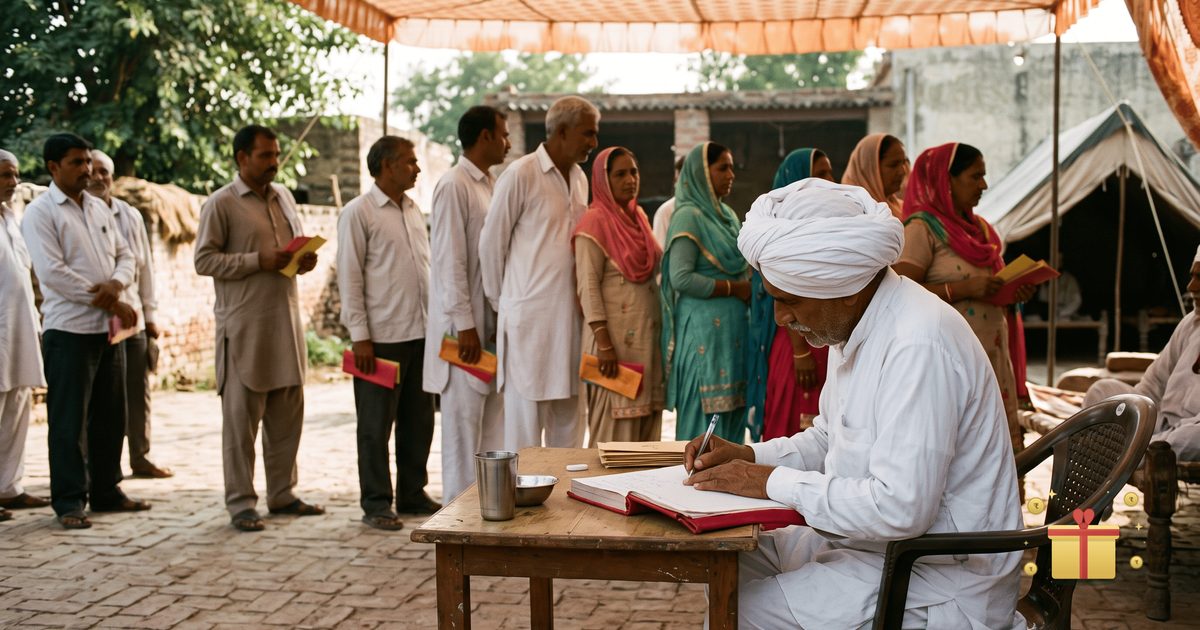
This is the volume event. Guests come through in a long line, hand over envelopes or parcels, greet the couple and move on. Cash and cloth arrive together, and the same guest often gives both. It is where most of the record is made, and where most of it goes wrong.
After the wedding
Gifting carries on through the first visits between the two homes, and through the first Diwali and the first big festival the couple spends as a married pair. It is the same continuing account, not a new one.
Who gives what: a rough guide
| Who | What is commonly given |
|---|---|
| Colleagues and acquaintances | An envelope with a modest odd amount, such as ₹501 or ₹1,100 |
| Friends | An envelope, often at a figure the friend group agrees between themselves |
| Close relatives | Aher — a saree or dhoti with a coconut — usually with an envelope as well |
| Maternal side | Traditionally the most generous gifting, and often the most visible |
| The two families to each other | Aher for the opposite side's close relatives, planned in advance |
If you are a guest and genuinely stuck on a figure, our guide on how much shagun to give at an Indian wedding works through the thinking. The short version: match the relationship, end the amount in one, and put your name on the envelope. An unnamed envelope leaves the hosts unable to thank you and unable to return the gesture when your own family has a function.
How families keep the record
Most Marathi families keep a notebook at the reception table with the guest's name, their village or area, and what they gave. The difficulty is specific to aher: a great deal of what arrives is cloth, not cash, and a notebook column made for rupees does not handle "green Paithani with gold border" very well.
What actually goes wrong
- Cloth gifts recorded as "saree" and nothing more. A year later there is no way to tell one entry from another, or which relative it came from.
- Envelopes without names. Every function produces a few, and they are unidentifiable by the end of the night.
- Gifts handed to relatives rather than the table. An envelope given to a maushi during the meal rarely reaches the book.
- Two people writing in one notebook. Entries get duplicated or skipped when the line builds up.
- The notebook itself. Ten or fifteen years later, when the next wedding in the family makes it relevant, it is faded or lost.
Habits that help
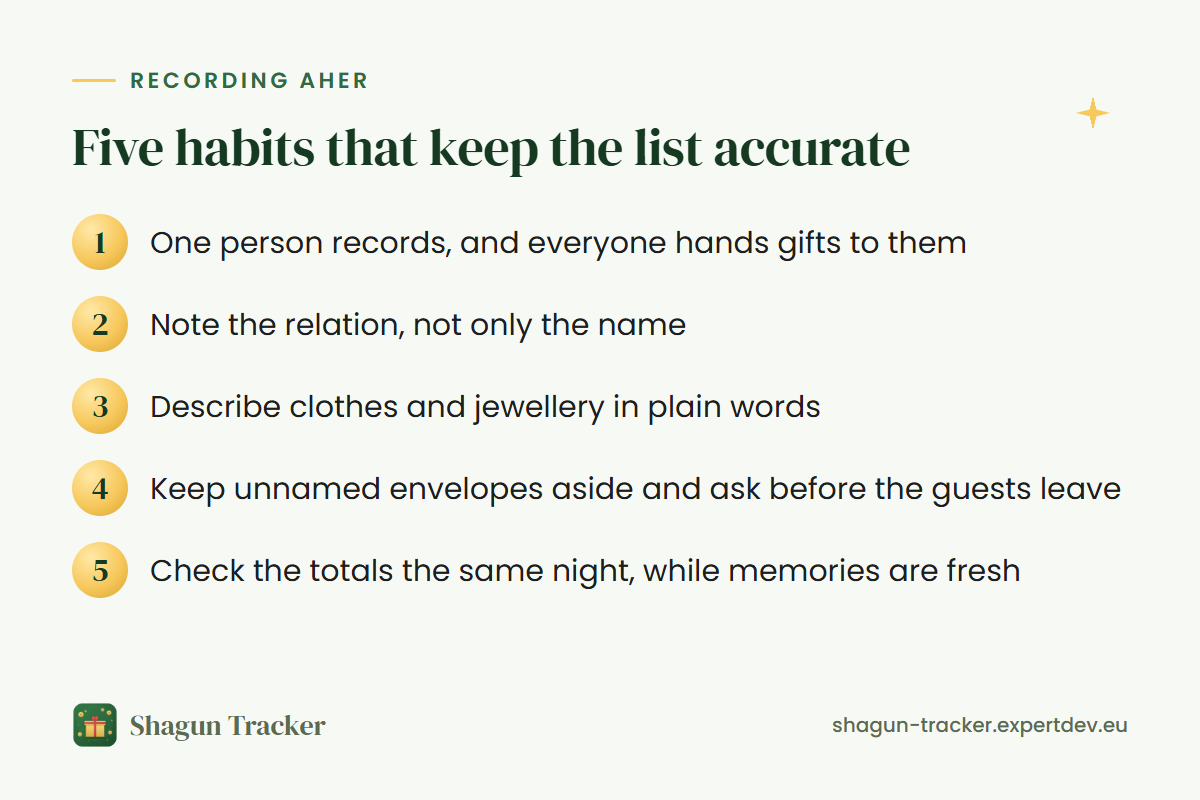
- One person, one list. Decide before the function who is recording, and send every gift to that person.
- Record at the moment of receiving. Not later that night, when nobody can separate the ₹2,100 envelopes from each other.
- Describe cloth properly. "Paithani, green, from Kaka's family, Nashik" is a record. "Saree" is not.
- Note the relation and the place, not just the name. "Deshpande" means nothing in eight years.
- Keep a second list for aher you give. What went to the other side's relatives matters as much as what came in.
- Copy it the same week. Photograph the pages or export a file and send it to two relatives.
Hosts who want a working plan for the table itself, rather than principles, should read the shagun counter checklist for hosts before the function.
Doing it on a phone instead
The reason many families have moved the notebook onto a phone is practical. The phone is already at the table, it totals the cash for you, and afterwards the list can be searched in seconds instead of read page by page — which is the difference between finding a name and giving up.
Shagun Tracker was built for exactly this. You create an event for the function, add each guest with a name, address and relation, and record what they gave as money, clothes, gold or other — so a saree can be written down as a saree, with a description, rather than squeezed into a rupee column. Totals update as you go, you can search any name in Hindi or English afterwards, and the list exports as a PDF or spreadsheet to share with the family. It works offline, which is what you want in a hall with no signal.
The point of writing it down
Aher is a promise to remember. A saree given at someone's wedding is meant to be answered at yours, and the answering is only possible if somebody kept the list. That is not accounting; it is how two families stay in relation to each other across a generation. The customs go by different names elsewhere — chandlo and shagun in a Gujarati wedding, milni and the lifafa in a Punjabi one — but the obligation to remember is the same everywhere.